
Customers in Store Count
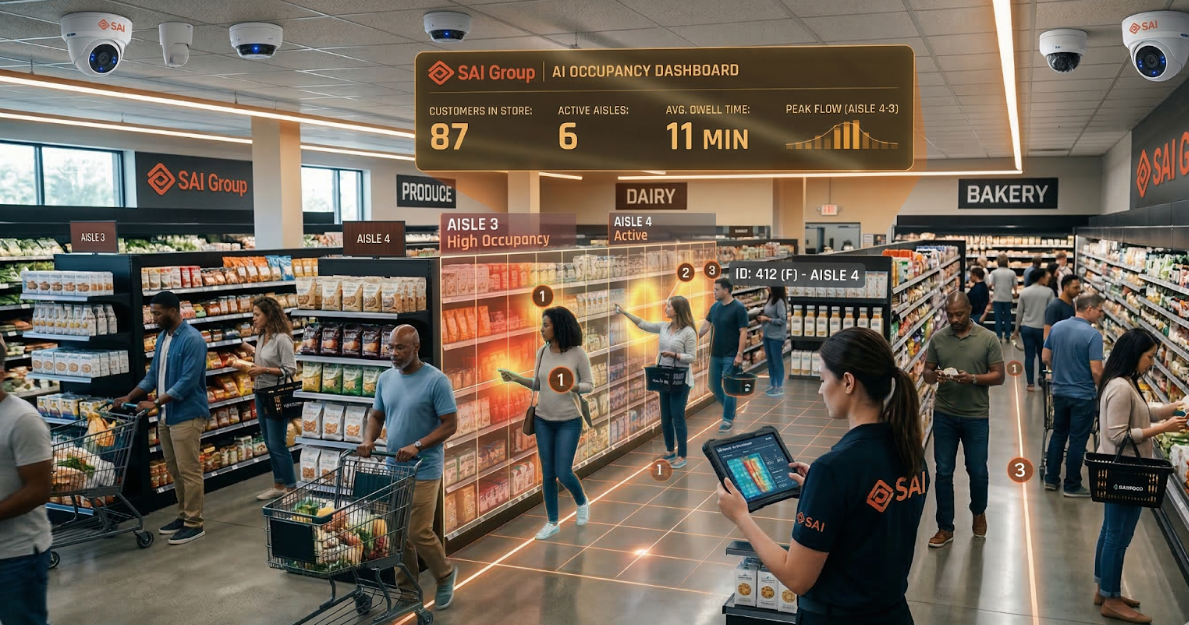
Average Time in Store
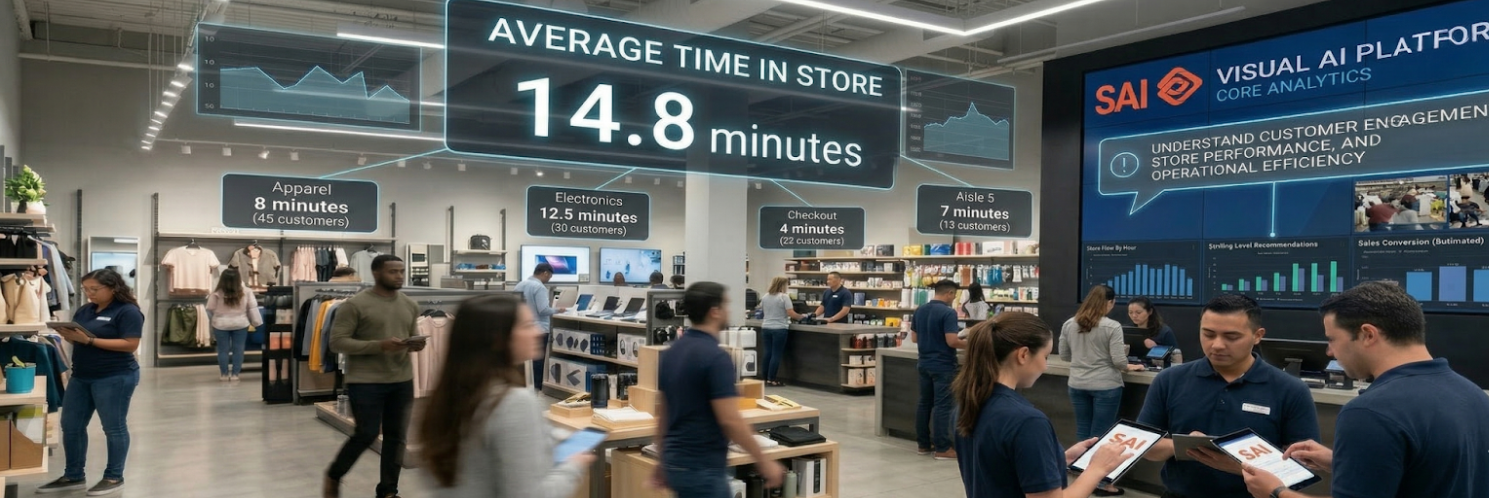
Customer Traffic Shape of Day
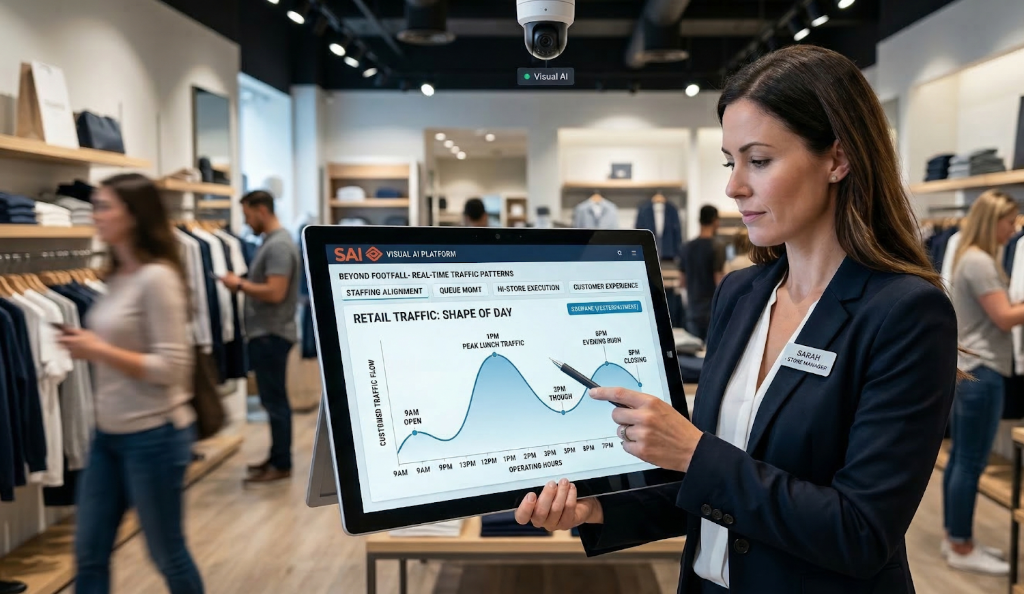
Checkout Queue Time
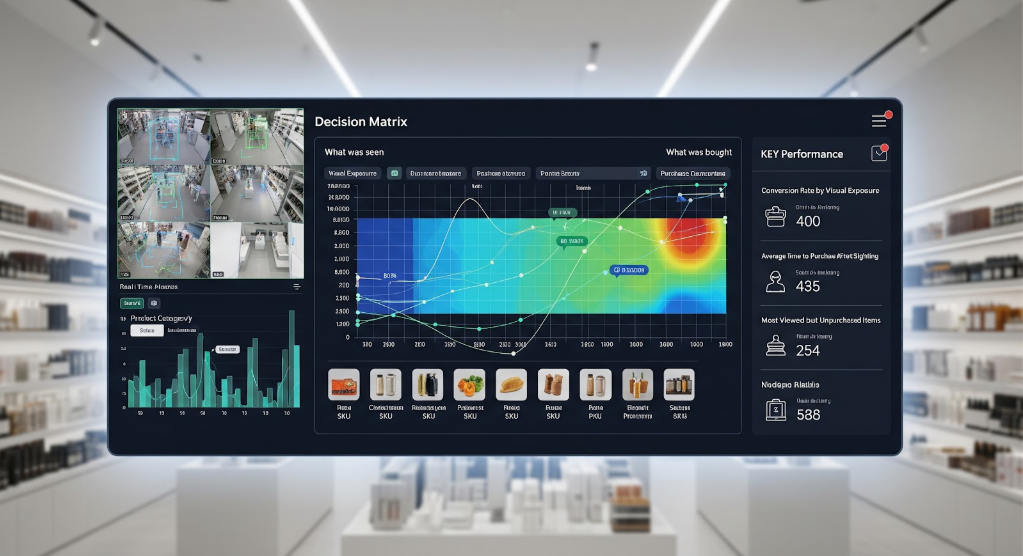
Decision Matrix
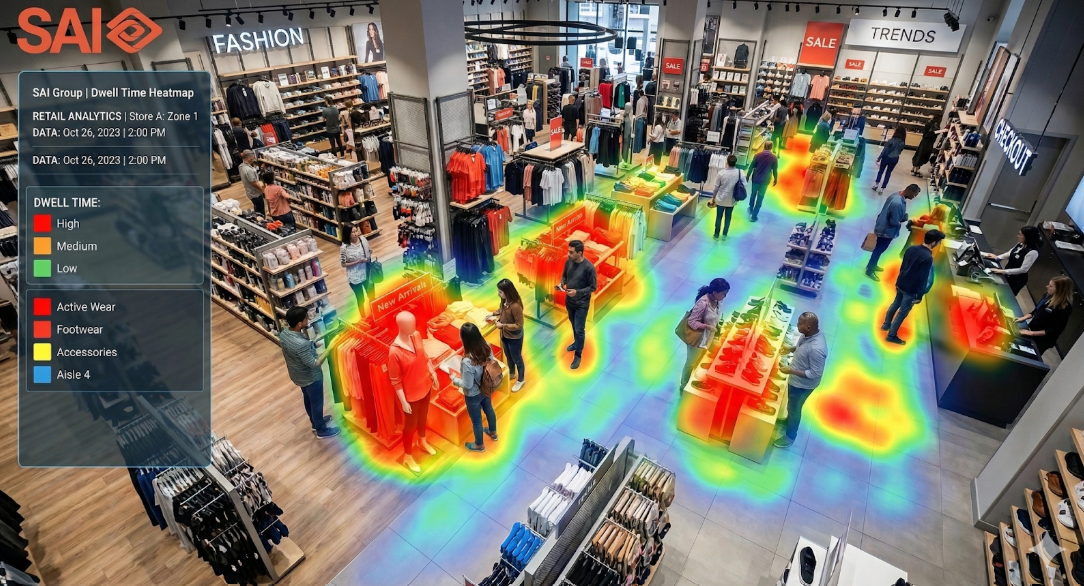
Dwell Time Heatmaps
Journey Statistics

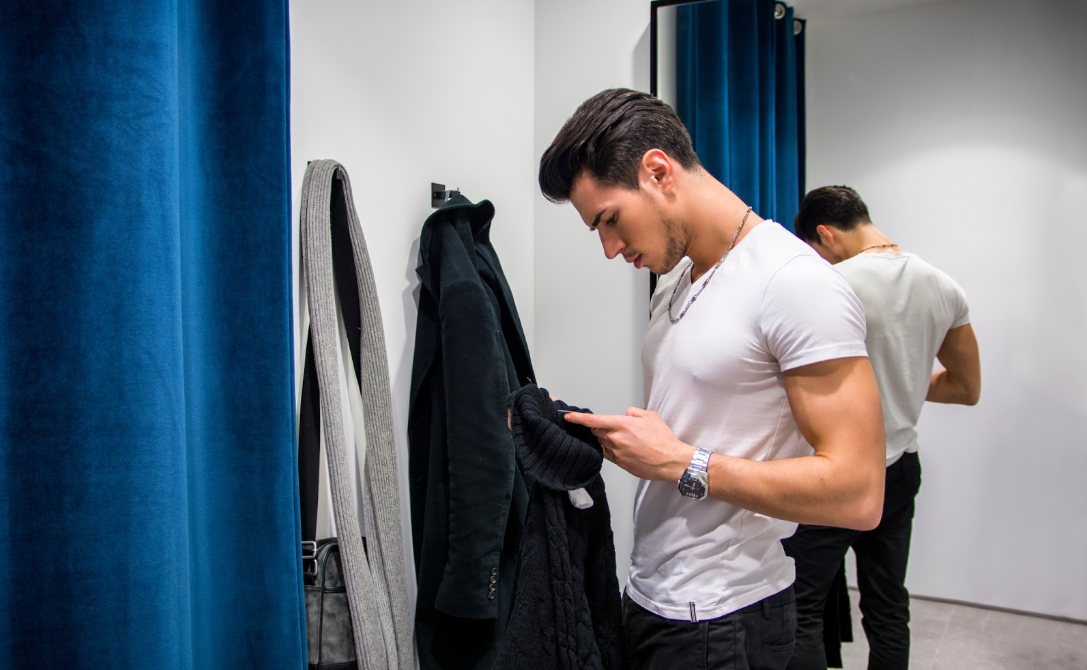
Protect Changing Area
Service Alerts

Customers in Store Count
Detailed view
Retail performance is fundamentally driven by customer presence. Knowing how many customers are inside a store at any given moment is essential for staffing, safety, store operations, and customer experience. The Customers in Store Count feature of the SAI Group Visual AI Platform enables retailers to maintain real‑time awareness of in‑store occupancy using computer vision applied to existing CCTV systems.
Built as part of SAI Group’s broader Store‑wide Active Intelligence approach, this feature converts passive camera feeds into actionable insights that help retail teams make faster, more informed operational decisions. By continuously estimating customer presence within the store, retailers gain a live operational signal that supports queue management, workforce allocation, safety monitoring, and peak‑hour planning—without relying on manual counting or intrusive hardware changes.
Why the Customers in Store Count feature is important for retail stores
Modern retail environments are dynamic and unpredictable. Customer footfall fluctuates throughout the day, across locations, and due to external factors such as promotions, weather, or local events. Without accurate visibility into how many customers are currently in store, retailers face several challenges:
Operational inefficiency
Stores may be understaffed during busy periods or overstaffed during quiet hours, directly affecting labor costs and service quality.
Customer experience risks
High in‑store density often leads to longer queues, crowded aisles, and reduced shopping comfort. Without timely awareness, teams are unable to intervene proactively.
Safety and security considerations
Customer volume is a key input for situational awareness. Understanding occupancy levels helps stores better manage congestion and respond to incidents in a controlled manner, aligning with SAI Group’s broader focus on store safety and operational oversight.
Limited real‑time visibility
Traditional footfall reports are often retrospective. By the time data is reviewed, the opportunity to act has already passed.
The Customers in Store Count feature addresses these gaps by providing a continuously updated view of customer presence, enabling retailers to respond in real time rather than react after the fact.
How the Customers in Store Count feature works
The Customers in Store Count feature is delivered as part of SAI Group’s visual AI platform, which overlays machine‑vision intelligence on top of existing CCTV infrastructure in retail stores.
At a high level, the feature operates as follows:
Camera‑based visual analysis
The platform analyzes video feeds from in‑store cameras that are already installed for security and operations. No separate people‑counting hardware is required, aligning with SAI Group’s emphasis on cost‑effective deployment using existing systems.
AI‑driven recognition of customer presence
Computer vision models interpret visual patterns within the store environment to estimate the number of customers currently present. This analysis runs continuously, allowing the system to adapt as customers enter, move through, and exit the store.
Real‑time aggregation and visibility
Customer counts are aggregated at the store level and made available through SAI’s operational interfaces, alongside other store insights such as queue management and safety alerts. This ensures that store teams and operations managers can view occupancy contextually rather than in isolation.
Privacy‑aware design
SAI Group positions its platform as operating within strict security and privacy standards, using visual AI to extract operational signals rather than personal identity information. This approach supports responsible use of computer vision in public retail environments.
FAQ
No. It is delivered as part of SAI Group’s visual AI platform, which provides multiple store‑wide intelligence capabilities using the same underlying camera infrastructure.
SAI Group’s platform is designed to work with existing CCTV systems already deployed in stores, minimizing additional hardware requirements.
Yes. The feature is intended to provide continuously updated visibility into in‑store customer presence, enabling real‑time operational responses.
SAI Group positions its solutions as operating under strict security and data‑protection standards, extracting operational insights from video feeds without focusing on personal identification.
Store managers, regional operations teams, and retail operations leaders benefit most, as the feature supports day‑to‑day decision‑making around staffing, service levels, and store readiness.