
Protect Changing Area
Customers in Store Count
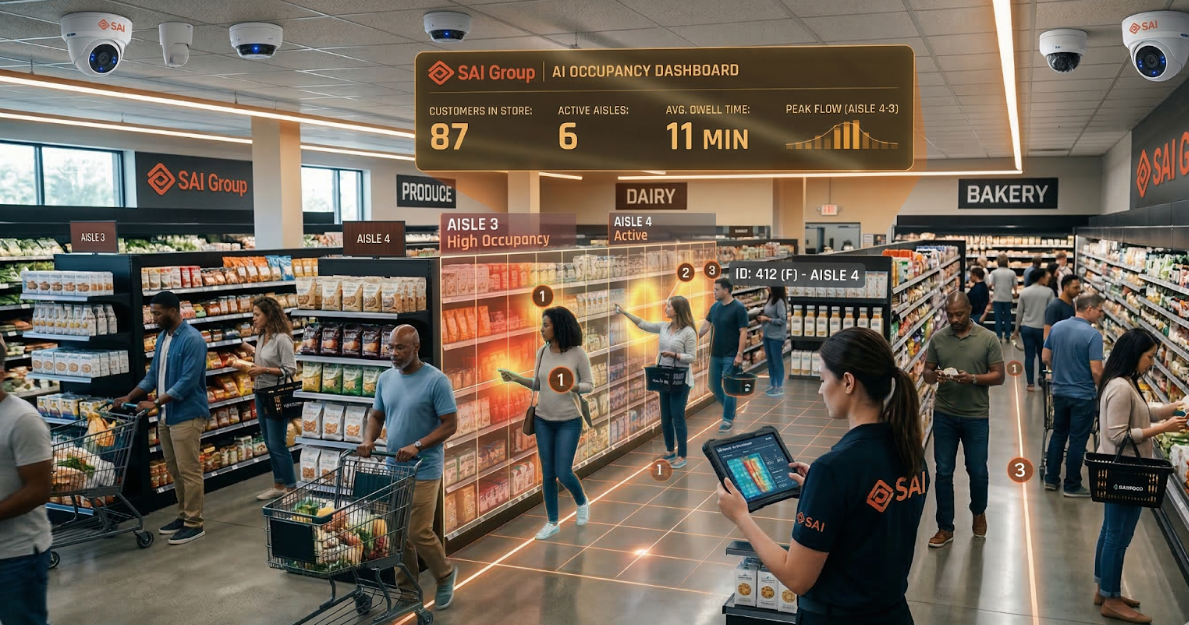
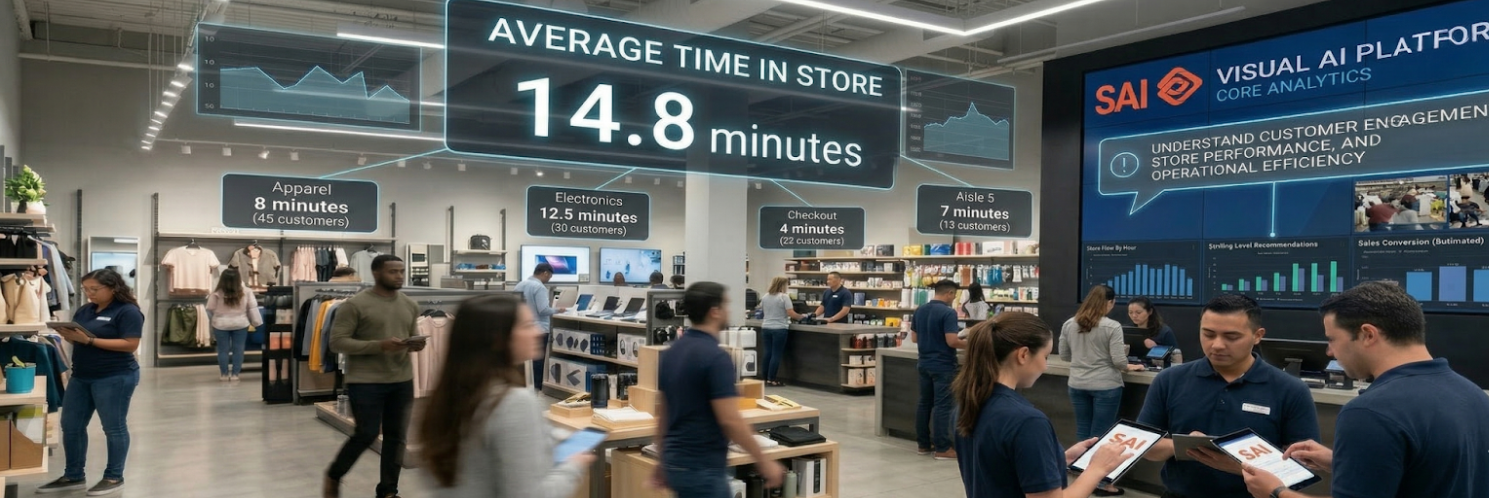
Average Time in Store
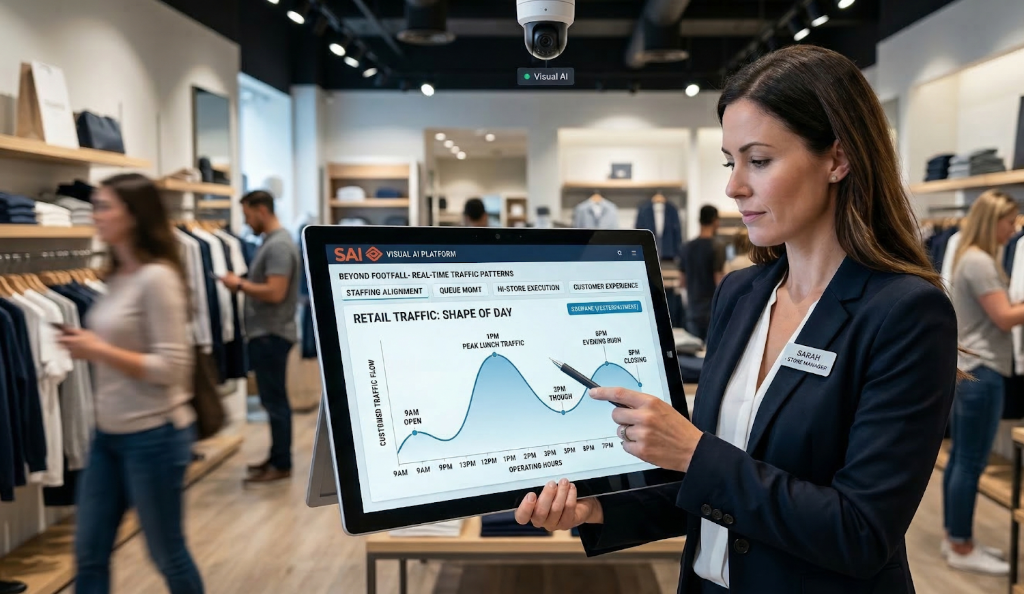
Customer Traffic Shape of Day
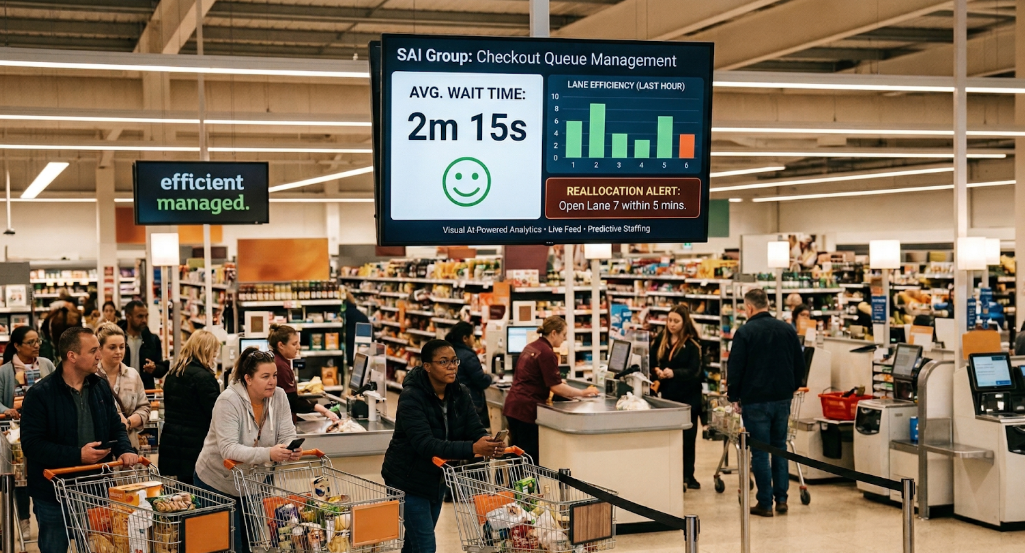
Checkout Queue Time
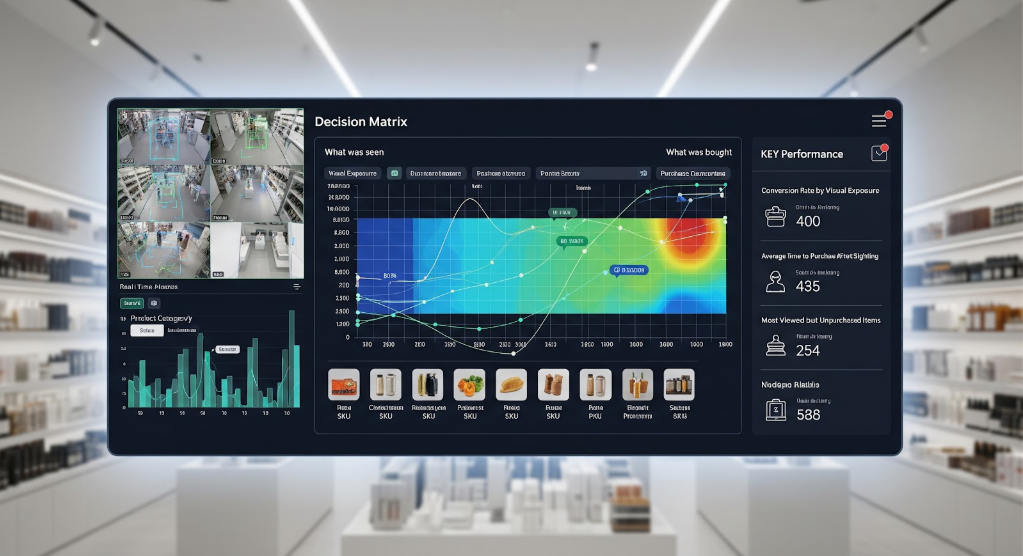
Decision Matrix
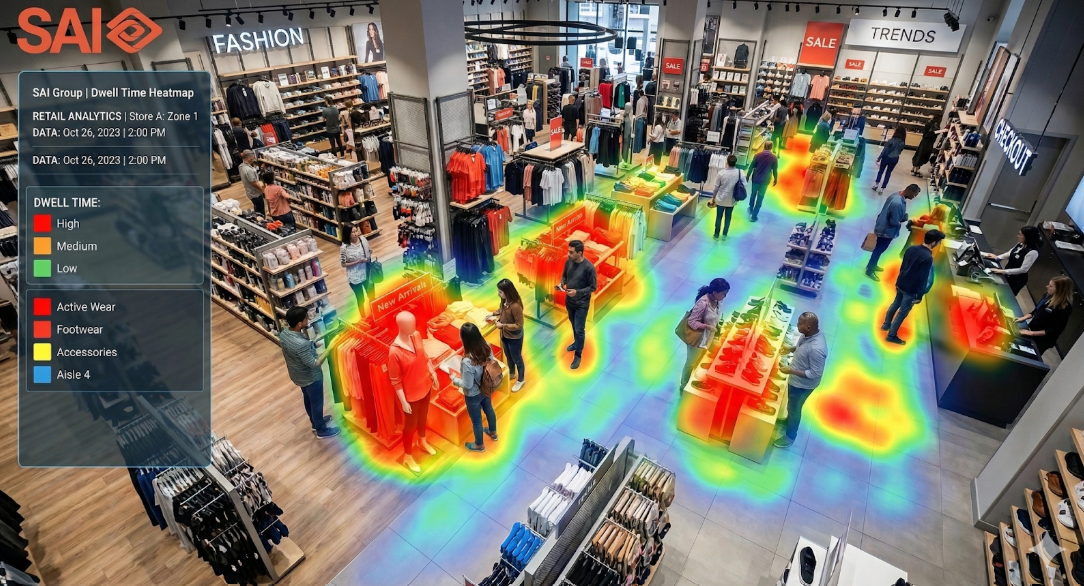
Dwell Time Heatmaps
Journey Statistics
Service Alerts

Protect Changing Area
Detailed view
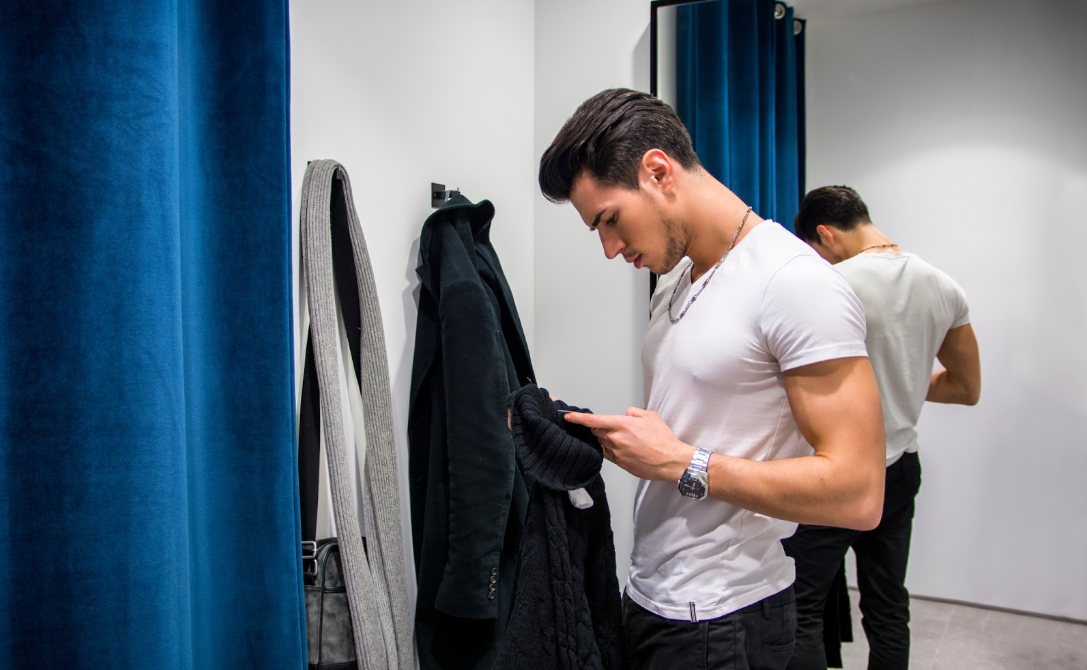
Retail theft within changing and trial areas is a persistent challenge that directly impacts revenue, inventory accuracy, and store operations. Traditional loss‑prevention methods often fall short in these semi‑private spaces, where staff visibility is limited and customer experience must remain unobtrusive.
The Protect Changing Area feature from SAI Group's Visual AI Platform addresses this gap by intelligently counting the number of items taken into and brought out of changing areas. By identifying mismatches between items entering and exiting, the feature enables retailers to detect potential theft incidents while maintaining customer privacy and operational efficiency. The result is a smarter, data‑driven approach to shrink reduction without disrupting the in‑store experience.
Why the Protect Changing Area feature is important for retail stores
Changing rooms and trial areas are among the highest‑risk zones for retail shrinkage. These spaces are intentionally designed to offer privacy, which limits the effectiveness of traditional surveillance and staff monitoring. As a result, items can be concealed, swapped, or removed without detection, leading to recurring losses that are difficult to quantify or prevent.
Key challenges retailers face include:
The Protect Changing Area feature is important because it introduces objective, automated visibility into an otherwise blind spot. By focusing on item count verification rather than customer identification, the feature helps retailers protect assets while respecting privacy expectations.
How does the Protect Changing Area feature work?
The Protect Changing Area feature uses visual AI to track and compare item counts associated with changing area usage. Instead of identifying individuals, the system focuses on the movement of items.
At a high level, the process works as follows:
1. Item Entry Counting
When a shopper enters a changing area, the system counts the number of items taken in. This count is recorded as a reference for that visit.
2. Item Exit Counting
As the shopper exits the changing area, the system again counts the number of items brought out.
3. Count Comparison
The platform compares the entry and exit counts.
- If the counts match, the interaction is treated as normal.
- If there is a discrepancy, the system flags the event as a potential theft risk.
4. Actionable Visibility
Flagged events can be surfaced to store teams or loss‑prevention workflows for review, follow‑up, or trend analysis.
By focusing on count mismatches rather than personal data, the feature supports theft detection in a way that aligns with operational practicality and privacy‑aware store design.
FAQ
No. The Protect Changing Area feature focuses on counting items, not identifying individuals. Its purpose is to detect discrepancies in item movement while maintaining customer privacy.
The feature is designed to operate in the background without interrupting or altering the customer’s changing‑room experience.
No. The feature is intended to support store teams by providing visibility and insights, not to replace human judgment or customer service.
When the number of items entering and exiting does not match, the event can be flagged for review. Retailers can decide how to integrate these alerts into their existing loss‑prevention or operational processes.
While changing areas are common in apparel retail, the underlying concept can apply to any retail environment where items are temporarily taken into semi‑private spaces for trial or evaluation.