
Pick in Aisle but not Scan in Main Bank
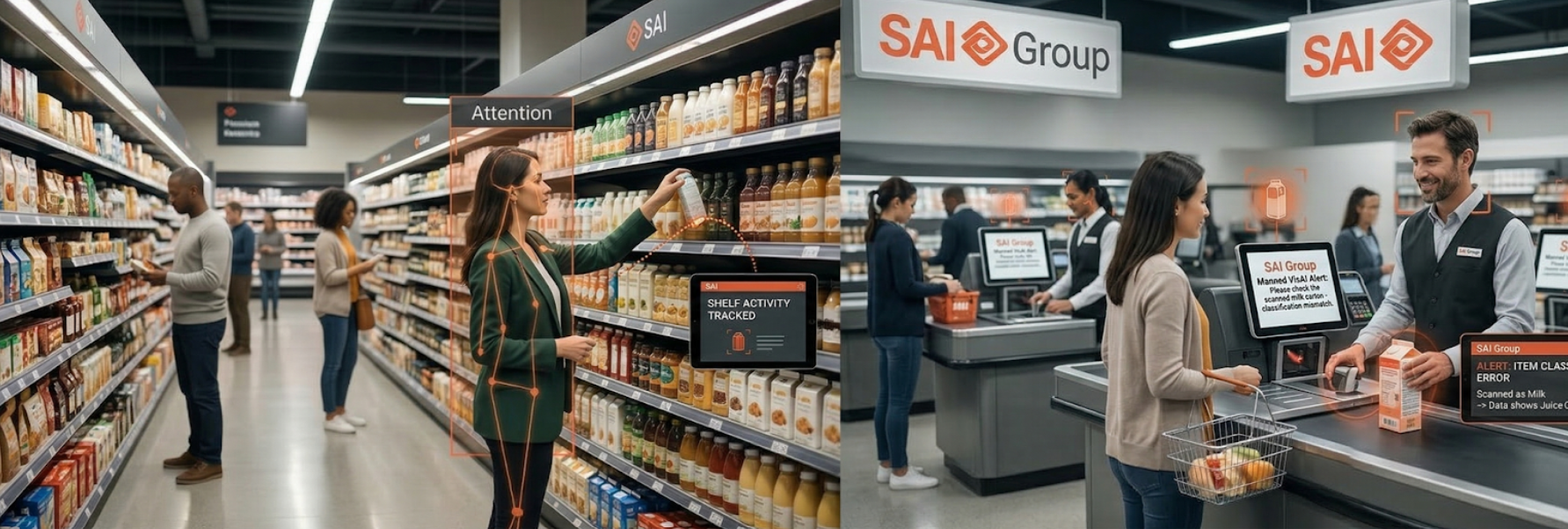
Aisle Monitoring
Full Trolley Pushout
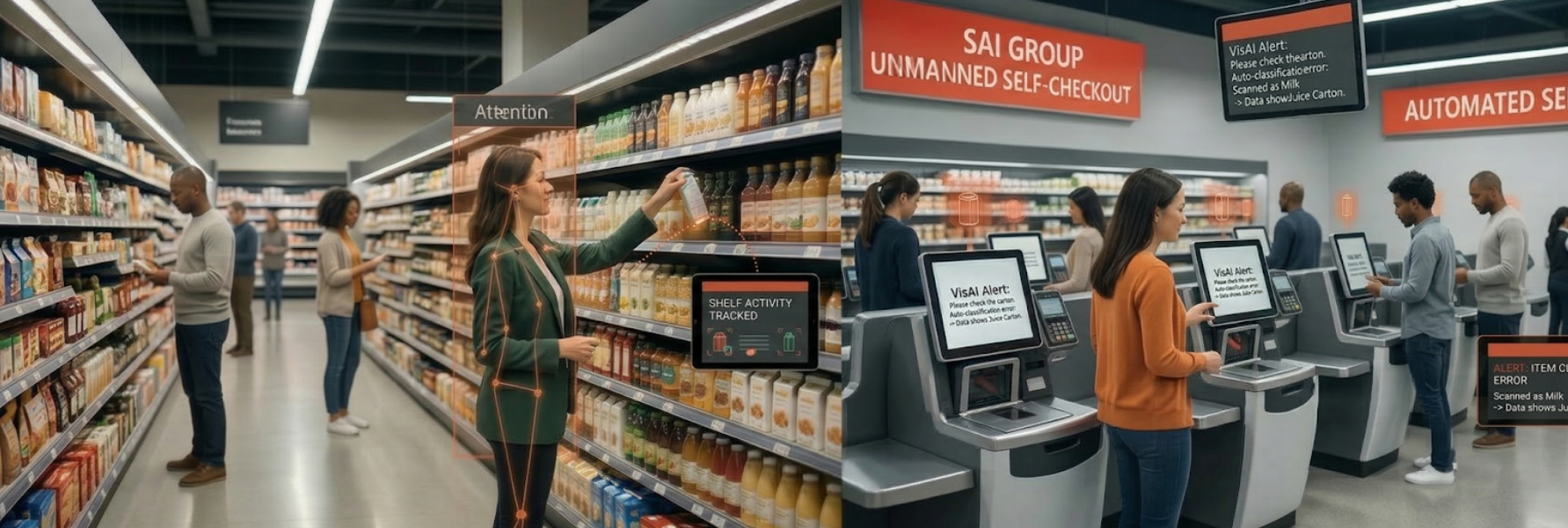
Pick in Aisle but Not Scan in SCO
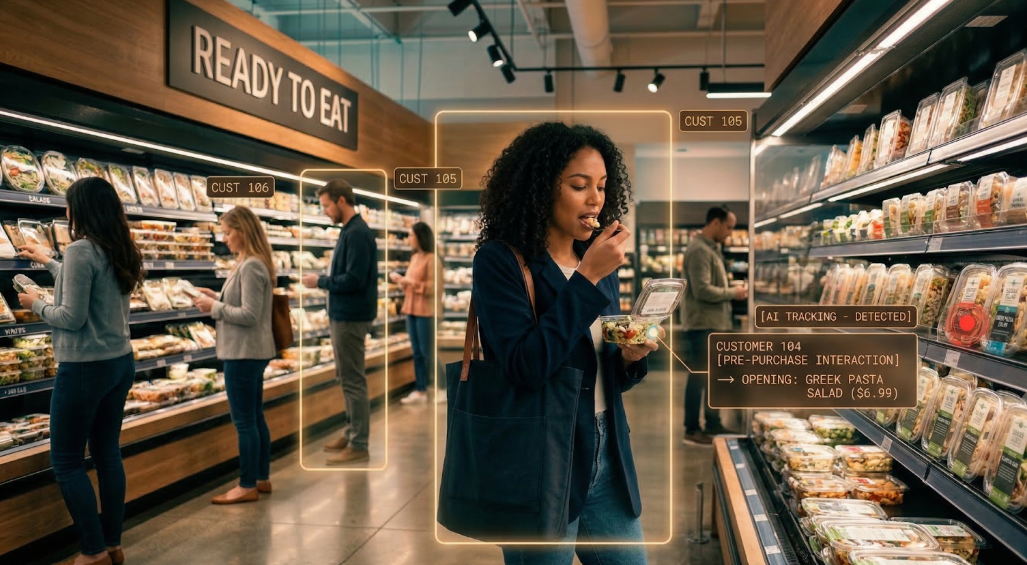
Consumption of Items in Store
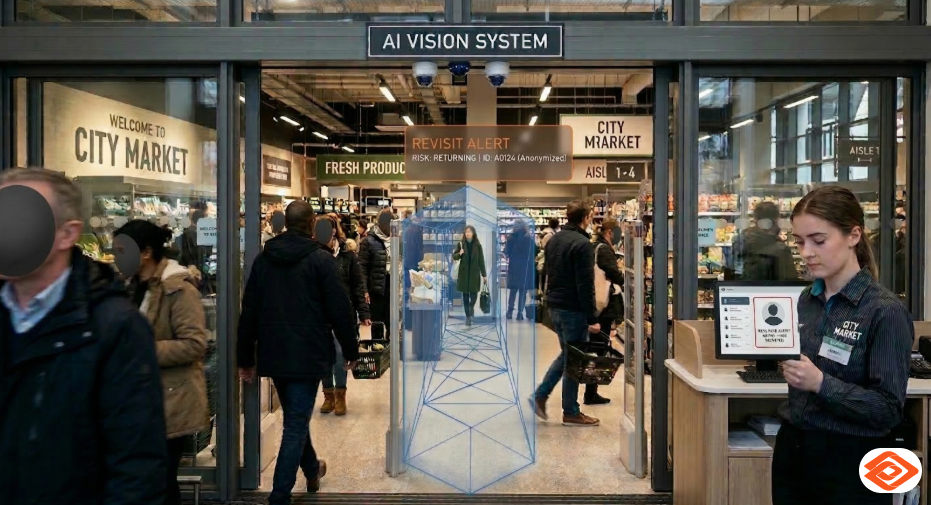
Revisit Alert
Shelf Swipe Alert

Pick in Aisle but Not Scanned at Main Bank
Detailed view
Retailers across the globe are facing a growing loss prevention challenge driven by the widening gap between product selection in aisles and payment completion at self‑checkout. As self‑service adoption increases, so does the risk of items being picked in the aisle but never scanned at the main checkout or “main bank.” This scenario — commonly known as pick in aisle not scanned — has become one of the most common forms of self-checkout theft in modern retail.
The Pick in Aisle but not Scan in Main Bank feature of the SAI Group visual AI platform addresses this challenge by using computer vision to correlate customer activity across the store journey—from aisle interaction to checkout behavior. Built on top of existing CCTV infrastructure, the platform detects situations where an item is removed from a shelf but is not subsequently scanned or paid for at checkout, enabling real‑time intervention and post‑incident reporting. This is a core capability within SAI Group's broader AI loss prevention platform.
By closing this visibility gap, retailers can reduce shrinkage, protect margins, and preserve a friction‑light customer experience without relying on intrusive controls or additional hardware.
Why Pick in Aisle but not Scan in Main Bank Is Important for Retail Stores
The Aisle-to-Checkout Blind Spot in Retail Loss Prevention
Modern retail loss no longer occurs only at store exits. A significant portion of shrinkage originates earlier—when products are concealed or carried from aisles and later bypassed at self‑checkout, either deliberately or accidentally. Traditional CCTV and point‑of‑sale systems typically operate in silos, making it difficult to connect these two moments into a single incident narrative. Addressing this blind spot is central to any effective retail shrinkage reduction strategy.
How Self-Checkout Increased Retail Shrinkage Risk
Self‑checkout lanes have become one of the most vulnerable points in the store. Customers may:
- • Fail to scan some items
- • Move items across scanners incorrectly
- • Complete partial payments
- • Walk away without finalizing transactions
SAI Group explicitly identifies missed scans and non‑payment at self‑checkout as a core loss vector, making self-checkout theft detection a central part of its visual AI platform.
Operational Pressure on Store Teams
Store staff are already balancing replenishment, customer assistance, and safety responsibilities. Manually monitoring aisles and checkouts simultaneously is neither scalable nor reliable. Automating detection of “picked but not scanned” scenarios reduces dependence on constant human oversight while improving response consistency.
How does the Pick in Aisle but not Scan in Main Bank feature work?
AI-Powered Monitoring Using Your Existing CCTV Cameras
The feature is powered by computer vision models layered over existing CCTV feeds, eliminating the need for specialized hardware. The platform continuously observes:
- •Customer interactions with products in aisles
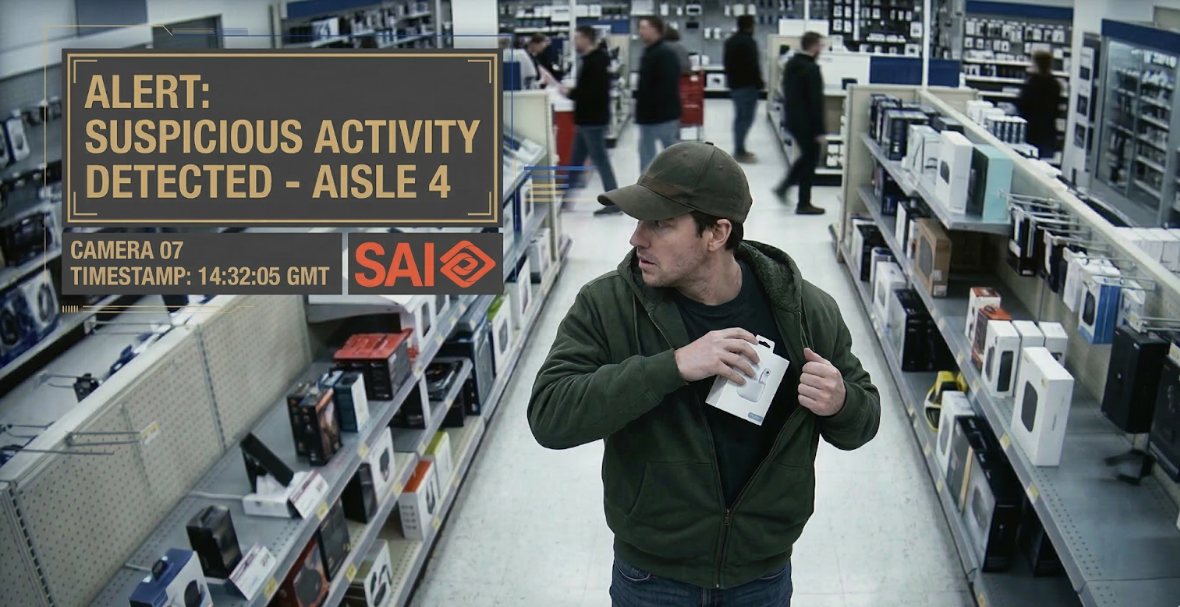
- •Object handling behaviors (removal, concealment, placement)
- •Activity at self‑checkout stations
This approach aligns with SAI Group's documented architecture of overlaying computer vision CCTV technology on existing surveillance systems.
Correlating Aisle Activity with Checkout Events
When an item is picked in an aisle, the system tracks whether a corresponding scan or payment event occurs at the main bank or self‑checkout. If the visual evidence indicates that the item never appears in the checkout flow, the platform flags this as an anomaly rather than immediately assuming malicious intent.
Real‑Time Alerts and Gentle Customer Correction
In supported checkout scenarios, the system can:
- •Prompt customers discreetly via on‑screen messages to review missed items
- •Notify store staff through handheld devices or alerts
SAI Group emphasizes self‑correction over confrontation, enabling customers to resolve genuine mistakes without staff intervention, while still giving teams visibility when follow‑up is required.
Evidence Capture and Incident Reporting
When escalation is necessary, the platform automatically extracts and stores legally admissible video evidence, significantly reducing the time required for post‑incident review and reporting. This capability is a documented feature of SAI Group’s visual AI platform.
FAQ
No. The feature is designed to detect anomalies between aisle picks and checkout scans. It supports correction of genuine customer mistakes as well as identification of deliberate non‑payment.
No. The visual AI platform operates on top of existing CCTV infrastructure, which is a documented characteristic of SAI Group’s solution.
The platform sends alerts to store staff over connected handheld devices or systems, allowing timely and proportionate responses.
The system prioritizes discreet prompts and self‑correction, minimizing friction and avoiding unnecessary staff intervention.
Yes. Detected incidents are automatically captured and stored as legally admissible video evidence, simplifying reporting and follow‑up.