
Start‑to‑End Video Stitching of Theft
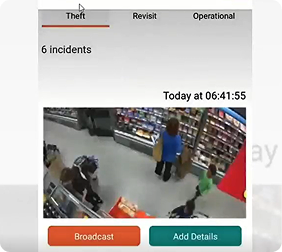
Broadcast
Subject Data Access Request (SDAR)
Feature.png)
Dashboard Feature
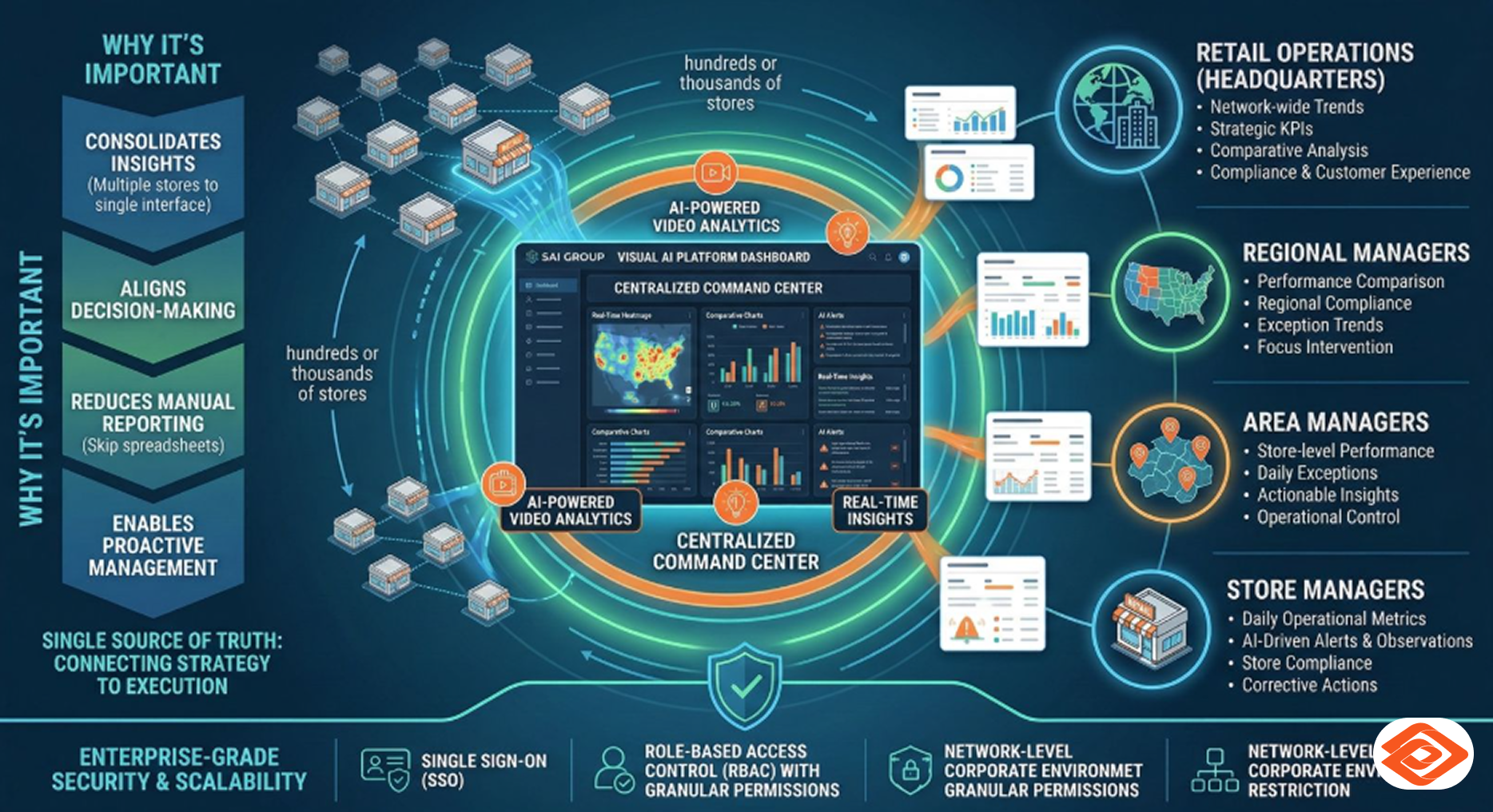
Turn retail data into insights using conversational AI

Functional Naming Of CCTV Cameras
Automated Health Check
Protecting Privacy in the Age of Visual AI
Crime Reporting
.png)
Integration and API Readiness

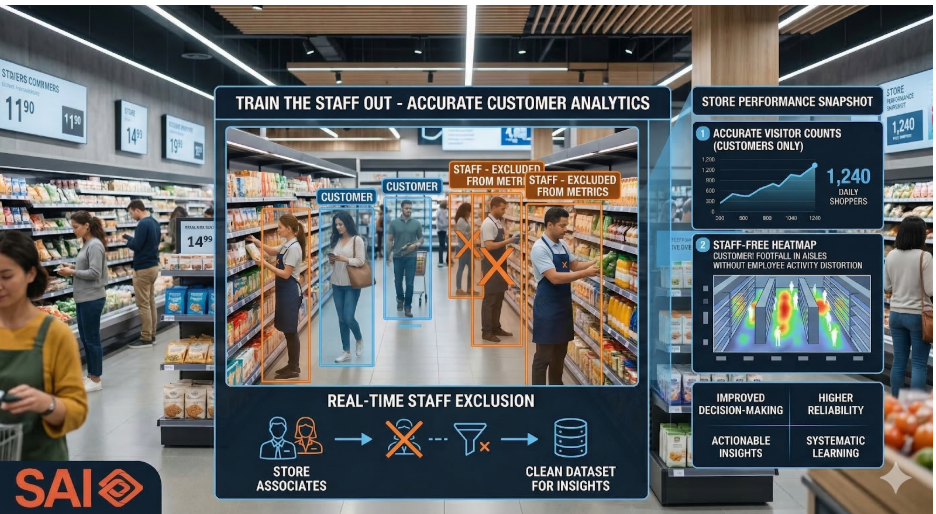
Train Out the Staff
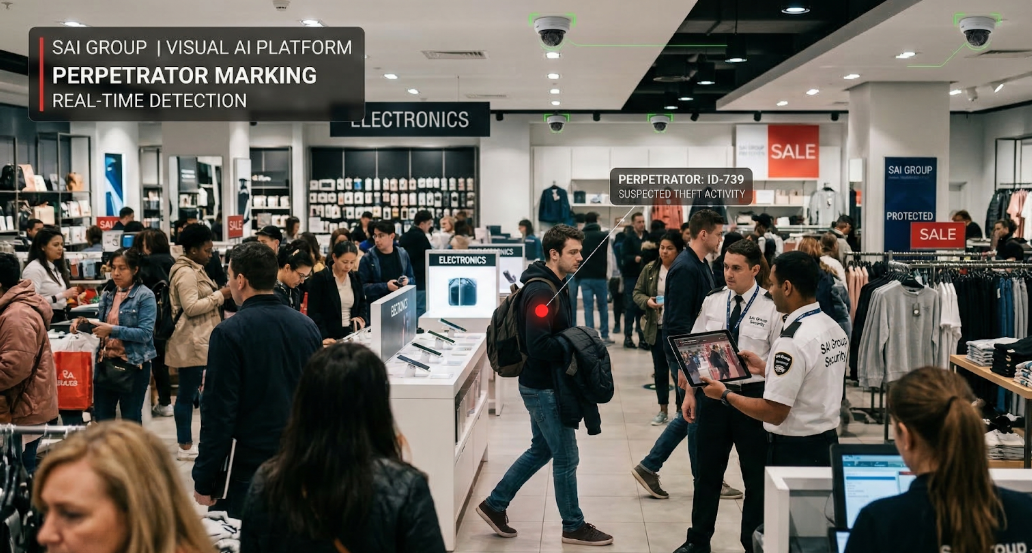
Perpetrator Marking Feature
Start‑to‑End Video Stitching of Theft
Detailed view
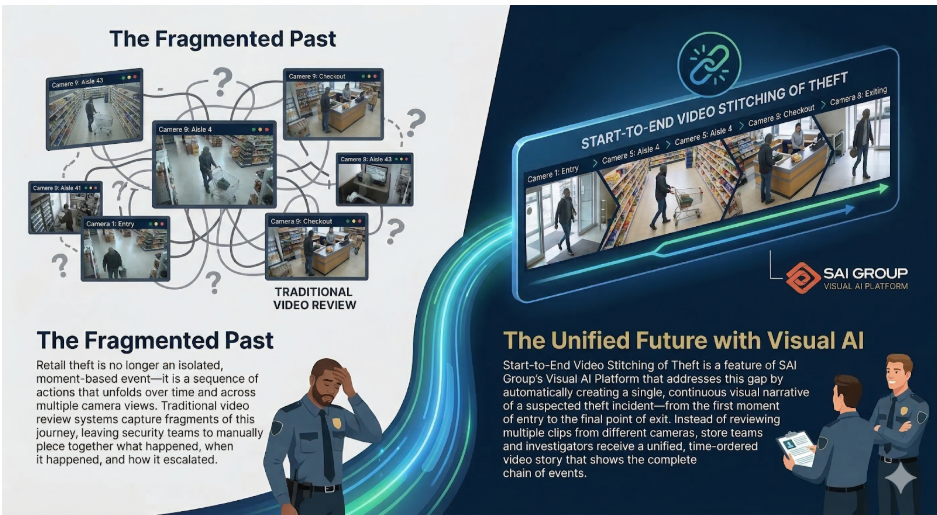
Retail theft is no longer an isolated, moment‑based event—it is a sequence of actions that unfolds over time and across multiple camera views. Traditional video review systems capture fragments of this journey, leaving security teams to manually piece together what happened, when it happened, and how it escalated.
Start‑to‑End Video Stitching of Theft is a feature of SAI Group’s Visual AI Platform that addresses this gap by automatically creating a single, continuous visual narrative of a suspected theft incident—from the first moment of entry to the final point of exit. Instead of reviewing multiple clips from different cameras, store teams and investigators receive a unified, time‑ordered video story that shows the complete chain of events.
This capability transforms loss prevention from reactive video search into proactive, evidence‑driven incident understanding—saving time, reducing ambiguity, and enabling faster, more confident decisions.
Why the Start‑to‑End Video Stitching of Theft feature is important for retail stores
Retail environments are complex, high‑traffic spaces with multiple camera feeds operating simultaneously. Theft incidents often span several zones such as entrances, aisles, shelves, fitting rooms, billing counters, and exits.
Without automated stitching:
The Start‑to‑End Video Stitching of Theft feature addresses these challenges by providing context, continuity, and clarity. It helps retailers not only confirm that a theft occurred, but also understand how, where, and in what sequence it happened—insights that are essential for prevention, staff training, and operational improvement.
How does the Start‑to‑End Video Stitching of Theft feature work?
At a high level, the feature uses visual AI to connect related moments across time and cameras into one coherent incident timeline.
The process begins when the platform detects a theft‑related trigger, such as suspicious behavior, policy violations, or a confirmed theft alert generated by the visual AI system.
Once triggered, the system identifies and follows the subject of interest across relevant camera views as they move through the store. This ensures continuity even when the individual exits one camera’s field of view and appears in another.
Video segments are aligned in chronological order, maintaining accurate timestamps and preserving the flow of events as they occurred in real time.
The platform automatically stitches these segments into a single, continuous video that represents the complete theft journey—from entry to exit.
The final stitched video is presented as a unified incident artifact that can be reviewed, shared, or archived for investigation, reporting, or training purposes.
This end‑to‑end approach removes the need for manual clip selection and reduces reliance on subjective interpretation.
FAQ
No. The feature is designed to work across multiple cameras, creating a unified view of an incident that spans different store areas.
No. The stitched video acts as a consolidated incident view. Original camera footage remains available for detailed review if required.
Yes. End‑to‑end incident videos are valuable for staff training, helping teams recognize patterns and improve response strategies.
The stitching is automated by the Visual AI platform, reducing dependency on manual clip selection and review.
Loss prevention teams, store managers, regional security teams, and central monitoring teams all benefit from this capability.