
SCO Queue Availability Management

Queue Management
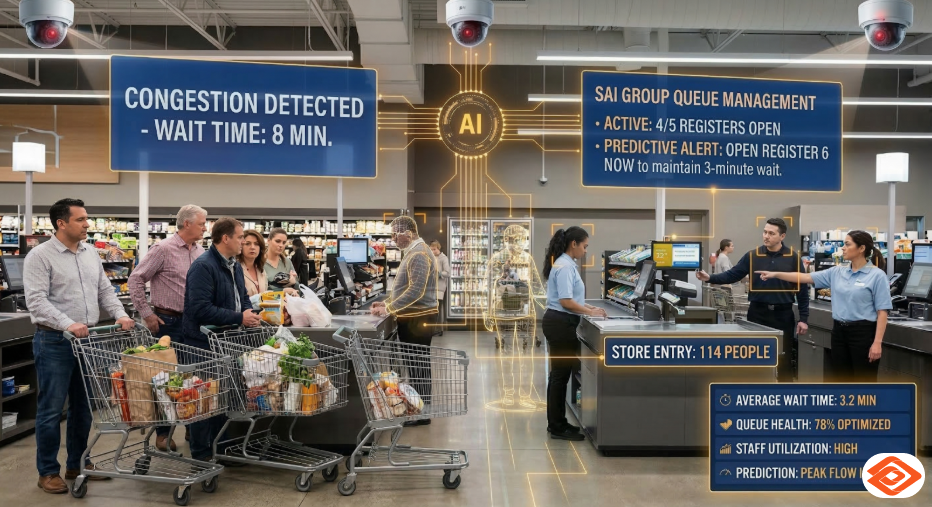
Queue and Checkout Monitoring
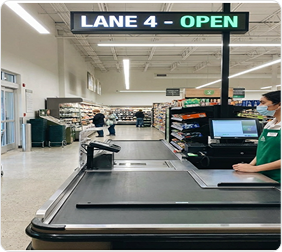
Self-Checkout Theft Detection & Monitoring
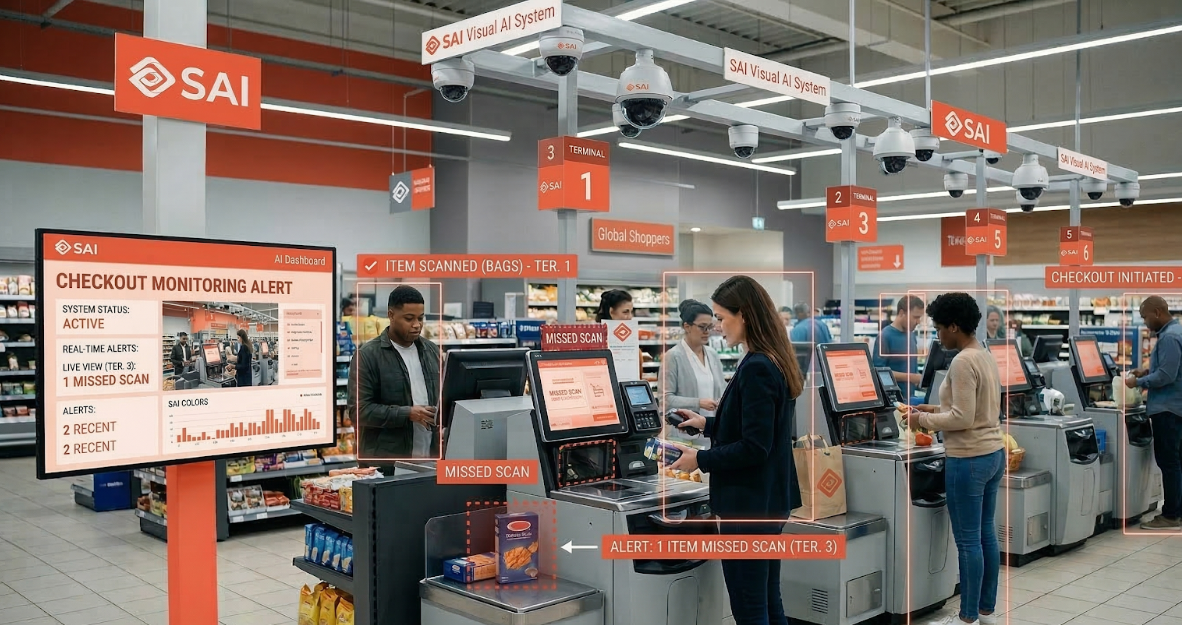
Self‑Scan Theft Monitoring
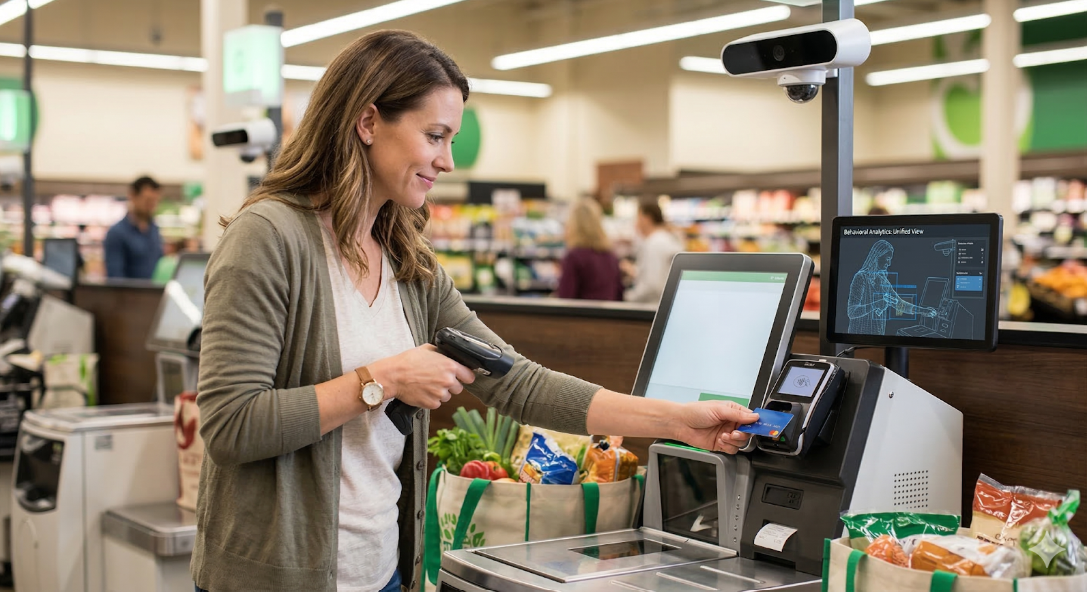
Internal Fraud
.png)
Assisted Checkout Monitoring
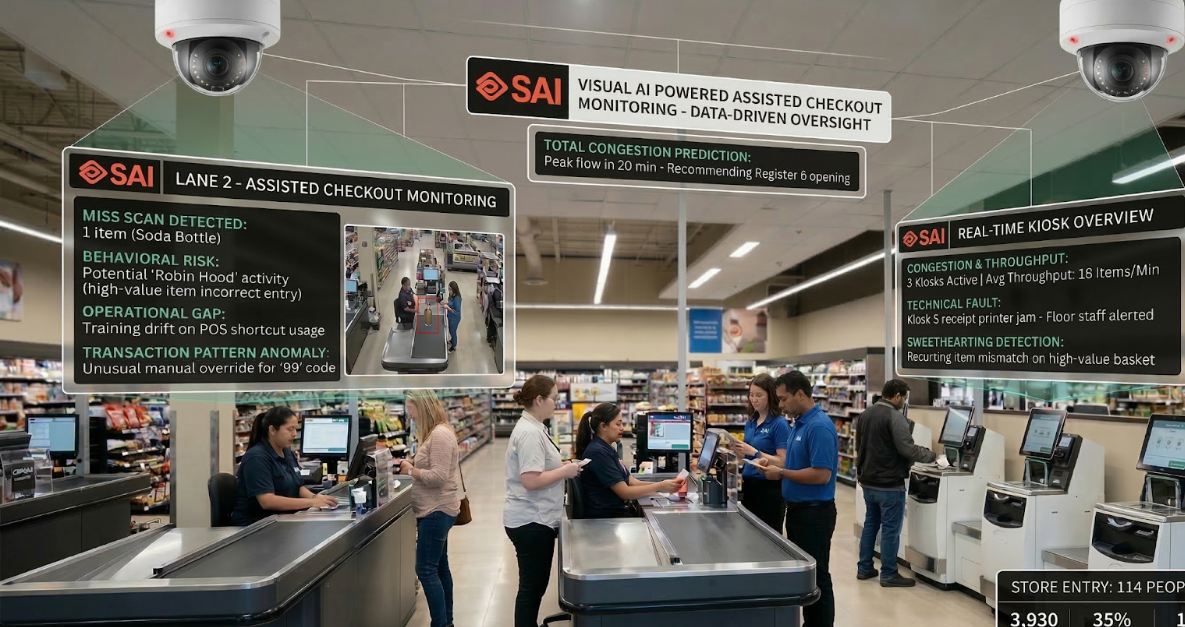
SCO Queue Availability Management
Detailed view
Self‑Checkout (SCO) counters have become a critical component of modern retail operations, offering speed, convenience, and reduced staffing pressure. However, inefficient queue management at SCO counters often results in customer frustration, uneven counter utilization, and lost throughput during peak hours.
The SCO Queue Availability Management feature of the SAI Group’s Visual AI Platform addresses this challenge by using computer vision and real‑time analytics to continuously monitor SCO queues, identify available or free counters, and intelligently guide customers toward them. By dynamically balancing customer flow across SCO lanes, the feature helps retailers reduce wait times, improve checkout efficiency, and enhance the overall in‑store experience—without adding operational complexity.
Why the SCO Queue Availability Management Feature Is Important for Retail Stores
Retail environments are increasingly defined by speed and convenience. Even small delays at checkout can negatively impact customer satisfaction and brand perception. Traditional queue management approaches—static signage, manual staff intervention, or customer self‑judgment—are often ineffective in busy or fast‑changing store conditions.
The SCO Queue Availability Management feature is important because it:
- •Addresses congestion at the final point of sale, where customer experience is most sensitive.
- •Prevents uneven usage of SCO counters, where some counters remain idle while others have long queues.
- •Reduces reliance on staff intervention,allowing store associates to focus on higher‑value tasks.
- •Supports peak‑hour scalability, when checkout volumes fluctuate rapidly.
- •Improves perceived store efficiency, which directly influences repeat visits and customer loyalty.
In competitive retail markets, intelligent queue optimization is no longer a “nice to have”—it is a key differentiator.
How the SCO Queue Availability Management Feature Works
The SCO Queue Availability Management feature operates as an intelligent, always‑on layer within the SAI Group’s Visual AI Platform. It uses visual data and AI‑based interpretation to make real‑time decisions about queue conditions and counter availability.
Real‑Time Queue Detection
Overhead or strategically placed cameras continuously observe the SCO area. The visual AI engine detects:
- • The presence and length of queues at each SCO counter
- • Customer movement and dwell time
- • Whether a counter is occupied, in use, or free
All analysis is performed in real time to reflect the current store situation.
Availability Assessment
The system classifies each SCO counter based on its status, such as:
- • Free and ready for the next customer
- • Occupied but nearing completion
- • Congested with a growing queue
This assessment is refreshed continuously, ensuring decisions are always based on live conditions rather than static rules.
Intelligent Customer Direction
When an imbalance is detected—such as long queues at one counter and availability at another—the system can trigger guidance mechanisms. These may include:
- • Visual prompts on digital signage
- • On‑screen messages at SCO entry points
- • Integration with in‑store communication systems
Customers are subtly directed toward available or faster‑moving SCO counters, reducing hesitation and confusion.
Continuous Learning and Optimization
Over time, the system learns from traffic patterns, peak hours, and customer behavior. This enables:
- • Better prediction of congestion points
- • Smarter balancing during rush periods
- • Improved performance without manual reconfiguration
FAQ
The feature is designed to work with standard camera infrastructure typically deployed for visual AI use cases. In many scenarios, existing cameras can be leveraged.
Yes. The system focuses on movement patterns, queue length, and counter status. It does not rely on facial recognition or personal identification.
Yes. The visual AI models can be configured to recognize various SCO layouts, including linear, clustered, or island‑style configurations.
Queue analysis and availability detection are performed in near real time, ensuring that guidance reflects the current store situation.
The SCO Queue Availability Management feature can be deployed as part of a broader visual AI ecosystem, enabling integration with digital signage, analytics dashboards, and operational workflows