
Functional Naming Of CCTV Cameras

Broadcast
Subject Data Access Request (SDAR)
Feature.png)
Dashboard Feature
Turn retail data into insights using conversational AI

Automated Health Check
Protecting Privacy in the Age of Visual AI

Crime Reporting
.png)
Integration and API Readiness

Start‑to‑End Video Stitching of Theft

Train Out the Staff
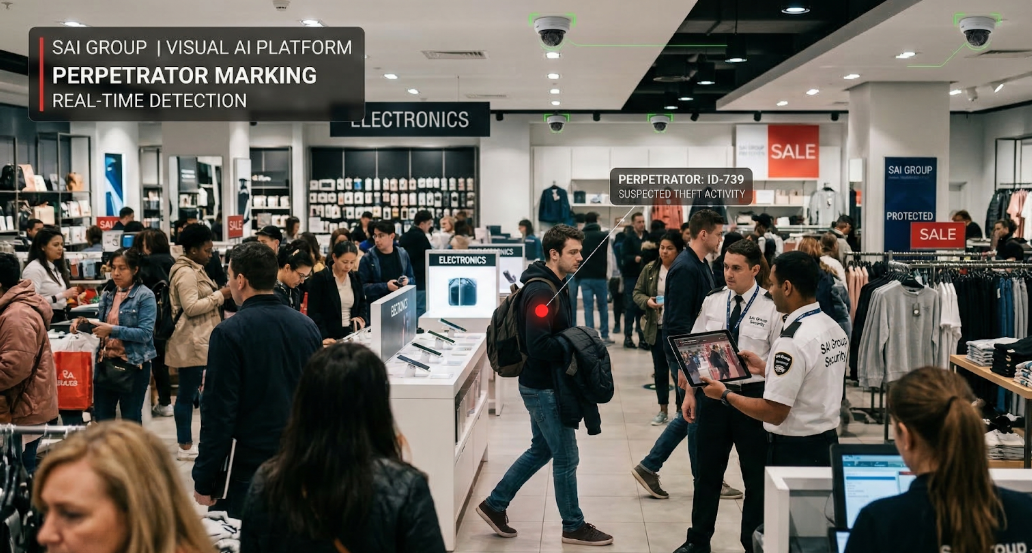
Perpetrator Marking Feature
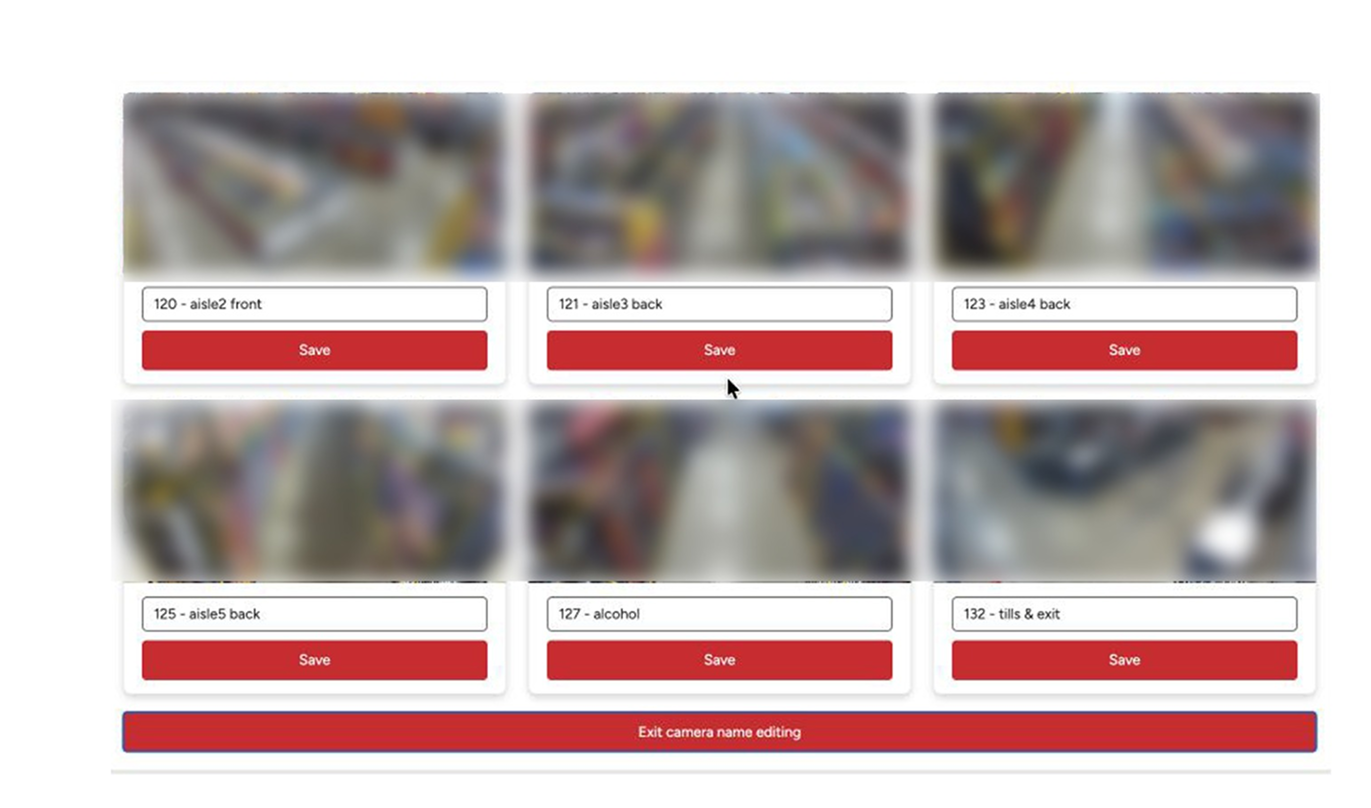
Functional Naming Of CCTV Cameras
Detailed view : Evolving Loss Prevention
Retail stores typically have a large-scale deployment of cameras to monitor entrances, exits, aisles, checkout counters, storage areas, and parking lots. Until recently, these legacy CCTV systems were mainly used in a passive manner, serving mainly as a deterrence against violence and theft. All the hardware was considered mainly as IT assets.
With the advent of visual AI platforms such as the one from SAI, these assets are of greater interest to loss prevention teams. Visual AI has transformed these passive CCTV installations into a proactive and potent line of defense, protecting the store and the staff against violence and losses.
What is Functional Naming?
Among all the features that the visual AI platform provides, real-time alerts are the most critical. They enable store and security personnel to respond to security incidents in a timely manner. However, as legacy CCTV installations use coarse naming conventions,valuable time may be lost in trying to decode the CCTV ID and to identify the relevant location in the store where the incident is reported.
How Does Functional Naming Work?
SAI Visual AI platform enables store staff to use a naming scheme that is easy for them to recall and quickly identify the location. The platform also enables renaming of CCTV cameras to match the change in store layout or items being monitored.
For instance, functional naming conventions such as Meat-01, Coffee-03, or Exit-05, makes it easier for alerts to be routed to the respective store and security staff in charge of such locations.
What happens after functional naming of cameras?
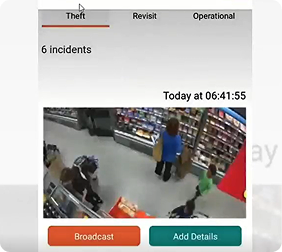
After naming cameras based on their functions, when a customer conceals or steals an item, the alert app connected to the visual AI platform provides the following information:
- •Clearly displays the section name where the incident occurred in the notification and on the alert
- •Includes the video evidence, enabling the staff to approach that area swiftly.
FAQ
Yes. Naming cameras by their monitoring purpose (for example, POS-01 for Point of Sale) helps AI systems categorize feeds for customer analytics and security, enhancing operational insights.
Avoid cryptic codes, duplicate identifiers, and inconsistent formats. Names should be intuitive, unique, and integration-friendly to maximize efficiency and minimize errors.
Always update camera names to reflect their new location or function. Avoid cryptic codes and ensure each camera has a unique, human-readable identifier. Consistency and integration-friendly naming prevent errors and confusion during incidents.