
Queue Management
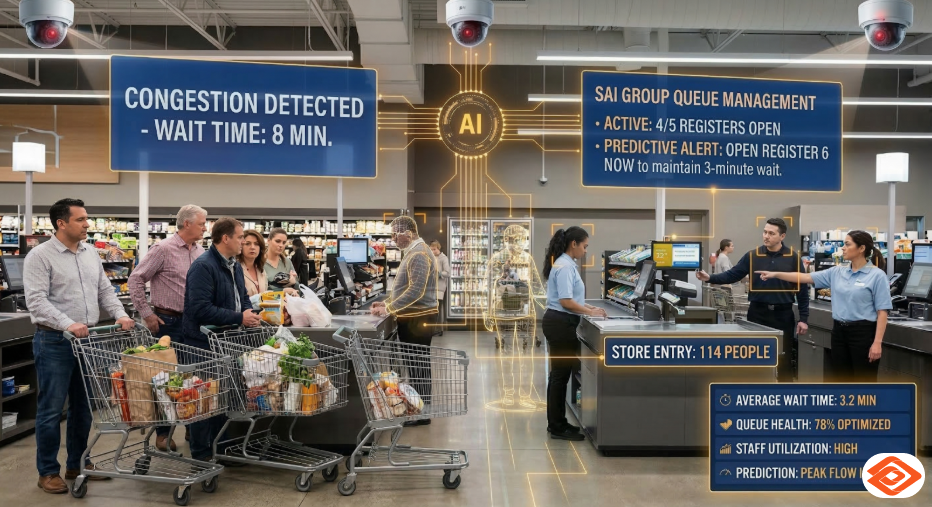
Queue and Checkout Monitoring
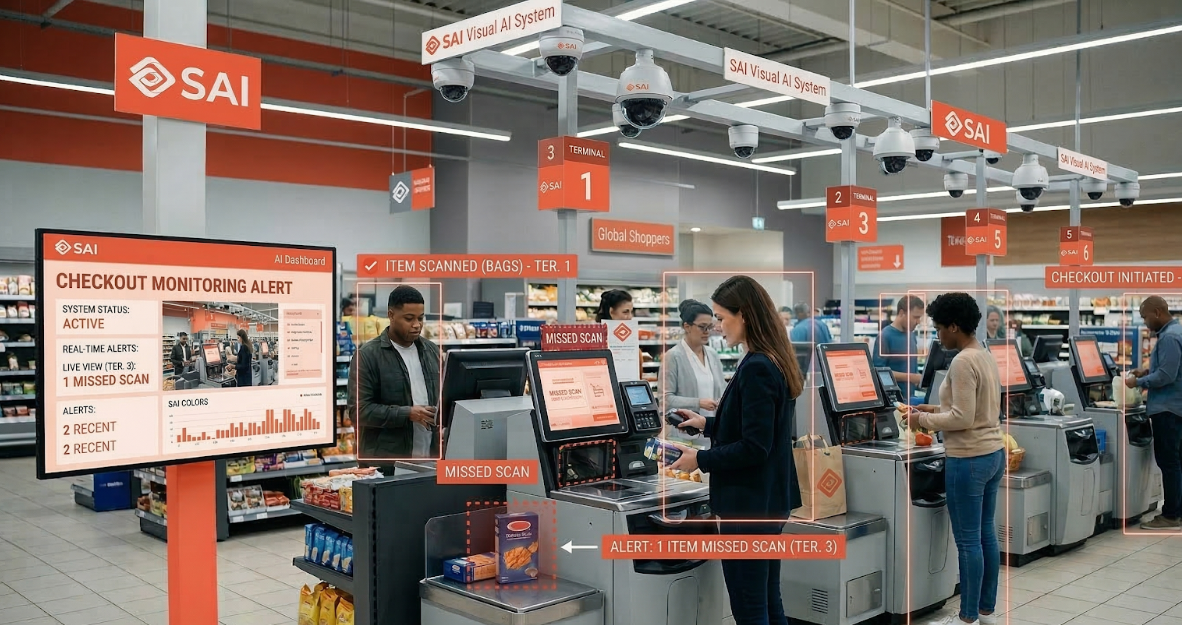
Self-Checkout Theft Detection & Monitoring
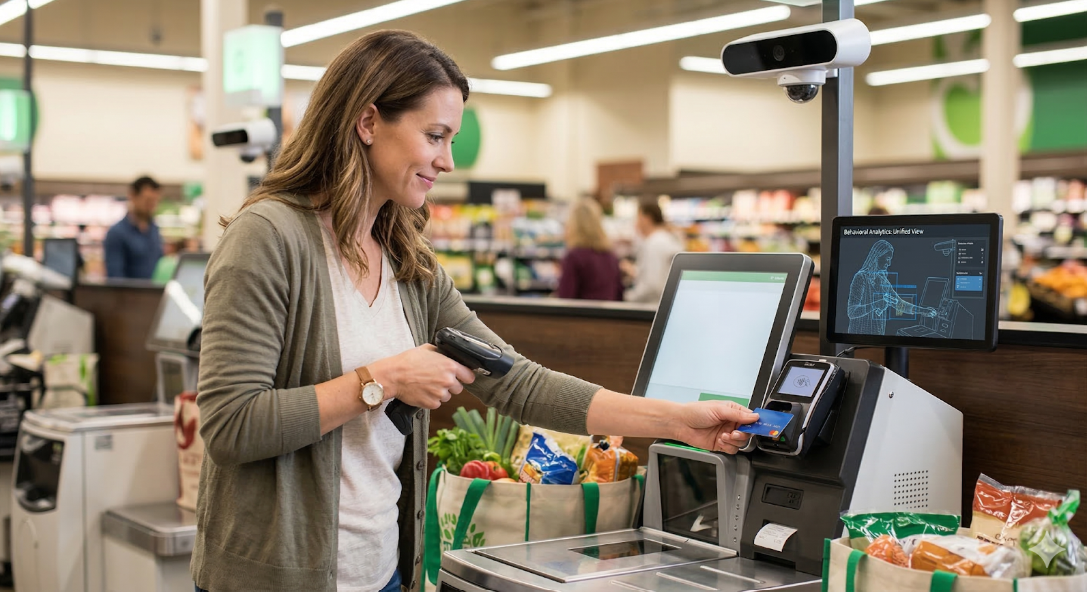
Self‑Scan Theft Monitoring
Internal Fraud
.png)
SCO Queue Availability Management
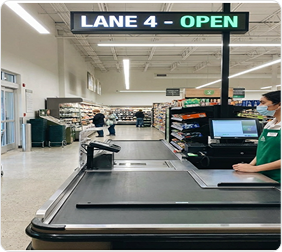
Assisted Checkout Monitoring
Queue Management
Detailed view
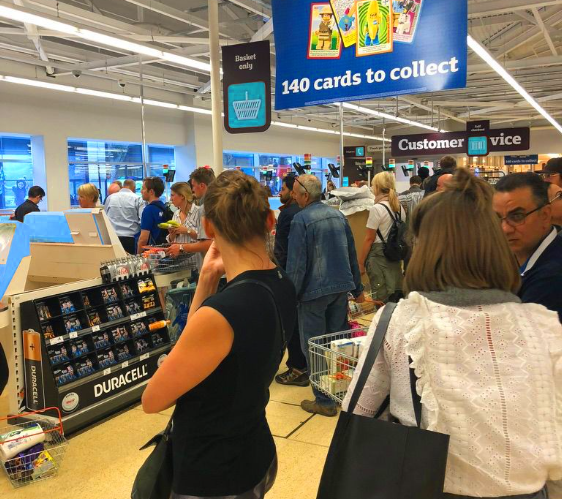
Queue congestion is one of the most visible and costly pain points in physical retail. Long or poorly managed queues lead to customer frustration, abandoned purchases, and inefficient use of staff. SAI Queue Management feature, powered by its Visual AI platform, enables retailers to move from reactive queue handling to proactive, data‑driven decision‑making.
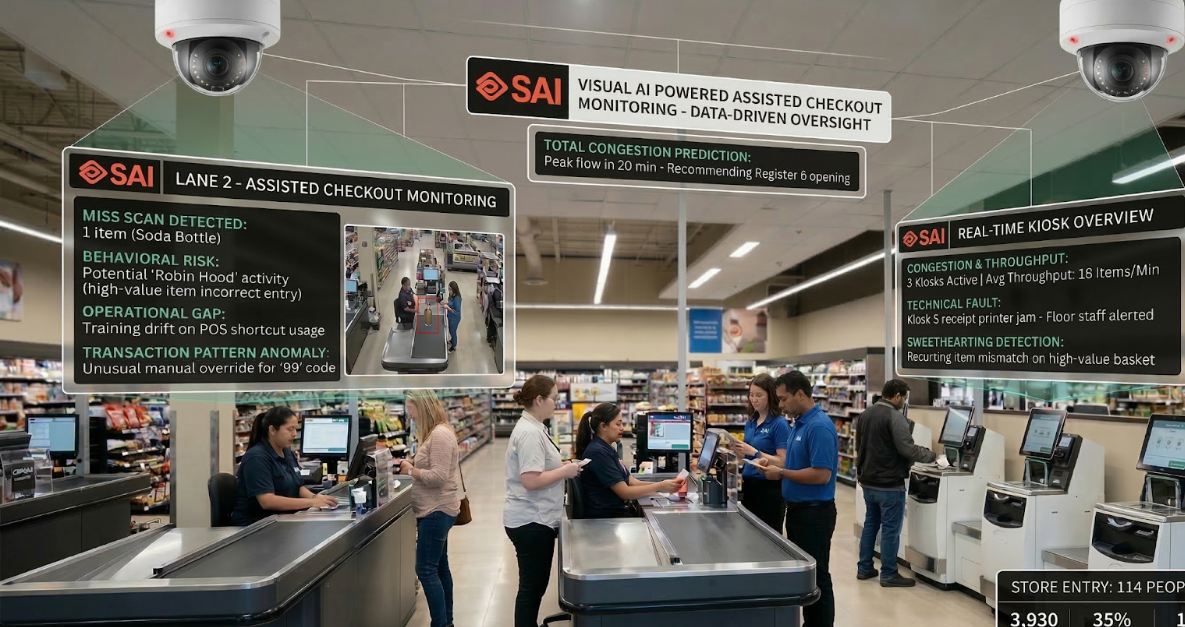
Using existing camera infrastructure, the system continuously analyzes customer movement and checkout activity across the store. It can be configured to measure different indicators of congestion—such as the number of baskets waiting at assisted checkout lanes, the number of people outside the belt area, or the live flow of customers from entry to checkout. In addition, the platform counts store entries, monitors real‑time checkout throughput, and predicts when additional counters should be opened to maintain service levels.
The result is a unified, real‑time view of queue health across the store, enabling managers to reduce wait times, improve staff utilization, and deliver a smoother, more predictable checkout experience for customers.
Why Queue Management Is Important for Retail Stores
Queues are more than an operational inconvenience—they directly impact revenue, brand perception, and customer loyalty.
From a customer perspective, waiting in line is one of the most negative moments in the in‑store journey. Even short delays can feel long if customers perceive the process as disorganized or understaffed. Studies consistently show that long or unpredictable queues increase cart abandonment and reduce repeat visits.
From an operations perspective, queues signal a mismatch between demand and capacity. Opening too few counters leads to congestion and lost sales, while opening too many counters translates to wastage of labor and increase in operating costs. Traditional queue management relies heavily on manual observation and staff intuition, which is inconsistent and difficult to scale across multiple stores or peak periods.
Queue Management powered by Visual AI allows retailers to:
By turning queues into a measurable, manageable metric, retailers gain tighter control over one of the most critical moments in the store experience.
How the Queue Management Feature Works
SAI Queue Management feature uses computer vision and advanced analytics to interpret live video feeds and convert them into actionable insights. The system is designed to be flexible, allowing retailers to define what “a queue” means for their specific store format and checkout design.
Flexible Queue Definitions
Different stores have different operational realities. The platform can be
configured to measure queues in multiple ways, including:
These configurations ensure that the metrics reflect real waiting conditions rather than generic assumptions.
End‑to‑End Customer Flow Tracking
Beyond static queue counts, the system tracks the live flow of customers through the store:
- •Counts people entering the store in real time
- • Monitors how customers move from entry points toward checkout areas
- • Correlates entry flow with checkout activity to understand demand patterns
This end‑to‑end visibility helps retailers anticipate pressure at checkout rather than reacting once queues have already formed.
Real‑Time Throughput Monitoring
The platform continuously measures checkout throughput—how quickly customers are being processed at each counter. By combining queue length, arrival rates, and processing speed, it builds an accurate picture of current service capacity.
Predictive Alerts for Counter Opening
Using historical patterns and live data, the system predicts when existing checkout capacity will become insufficient. Managers or supervisors can receive alerts indicating when an additional counter should be opened to prevent queues from exceeding acceptable thresholds. This predictive capability allows staff to act early, rather than responding after customers are already waiting.
FAQ
Yes. The platform supports multiple queue definitions, such as basket‑based, people‑based, or zone‑based queues, depending on store requirements.
Predictions are based on a combination of real‑time data and historical patterns, allowing the system to provide early, practical recommendations rather than reactive alerts.
Yes. The feature can be configured to monitor assisted lanes, self‑checkout zones, or a combination of both.
Insights are delivered in real time, enabling immediate operational decisions such as opening additional counters or reallocating staff during peak periods.