
Self‑Scan Theft Monitoring
Internal Fraud
.png)
Self-Checkout Theft Detection & Monitoring
Queue and Checkout Monitoring
Queue Management
SCO Queue Availability Management
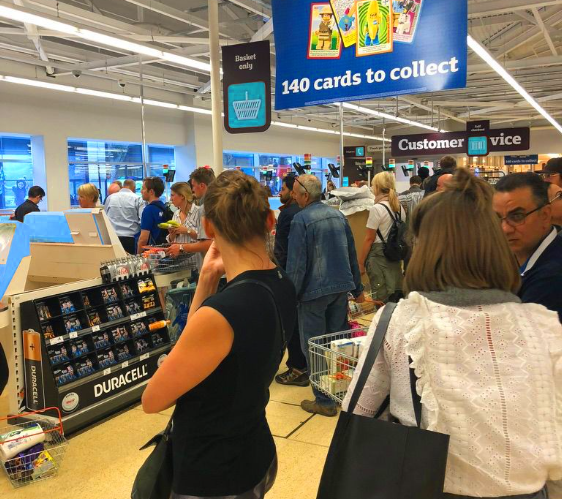
Assisted Checkout Monitoring
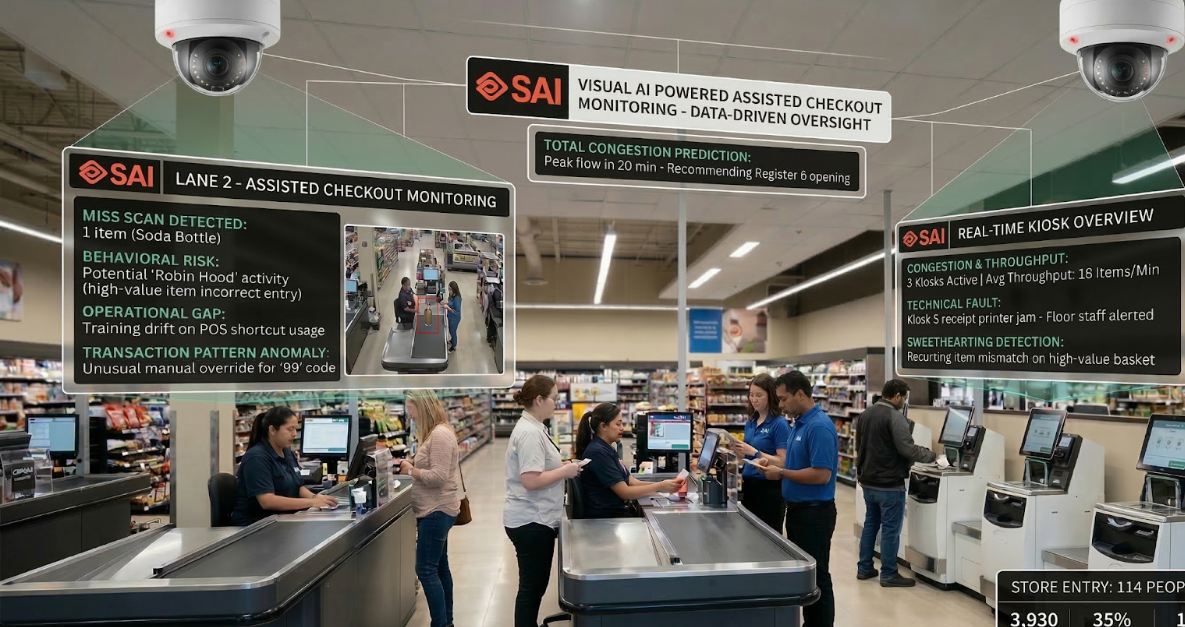
Self‑Scan Theft Monitoring
Detailed view
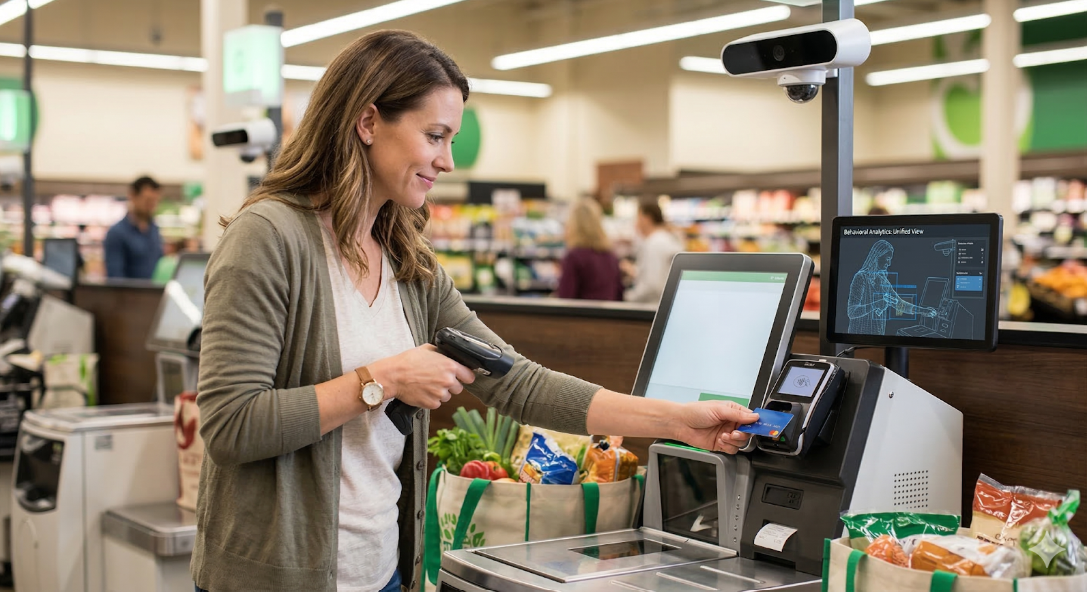
Self‑checkout and self‑scan shopping experiences have become an essential part of modern retail, offering speed, convenience, and reduced operational overhead. However, these benefits come with a significant challenge: self‑scan shrinkage, where customers intentionally or unintentionally scan only a subset of the items placed in their trolley.
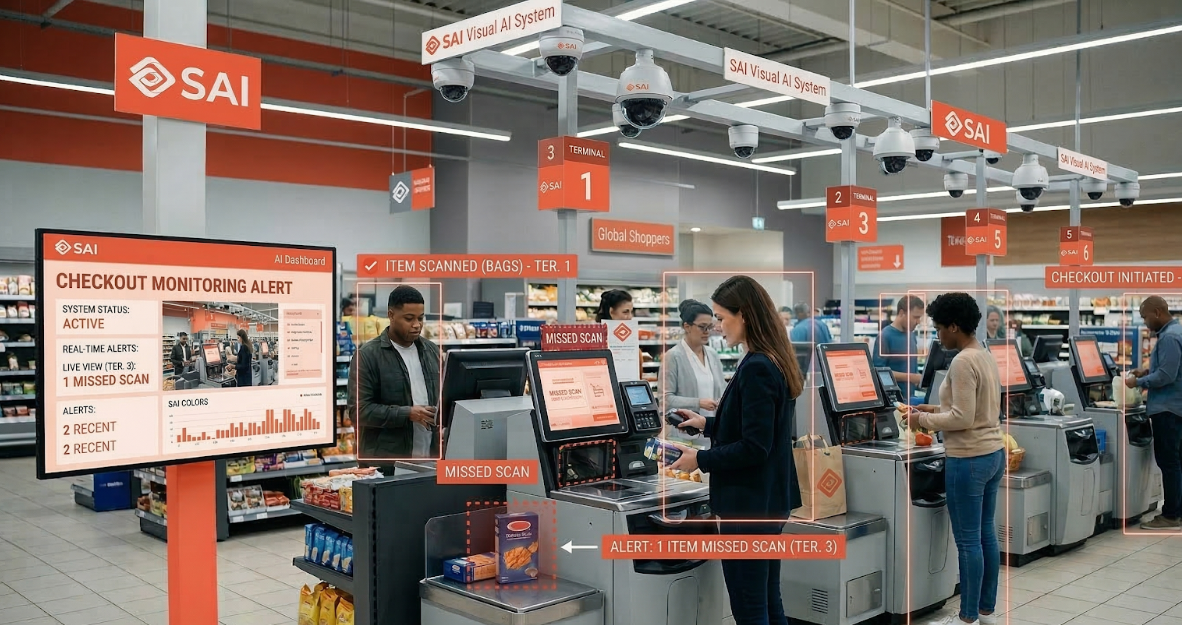
The Self‑Scan Theft Monitoring feature of SAI Group’s Visual AI Platform addresses this challenge by intelligently detecting mismatches between what customers scan for payment and what is physically present in the shopping trolley. By correlating barcode scan data with video‑based visual analysis of trolley contents, the platform identifies anomalies where the basket size or item count does not align with the scanned list.
This feature enables retailers to move from reactive loss prevention to proactive, data‑driven monitoring, reducing revenue leakage while preserving a smooth and frictionless customer experience.
Why the Self‑Scan Theft Monitoring Feature Is Important for Retail Stores
Self‑scan systems rely heavily on customer honesty and correct scanning behavior. In real‑world store environments, several risk scenarios emerge:
These gaps make self‑scan theft difficult to detect using traditional methods alone.
The Self‑Scan Theft Monitoring feature is critical because it:
By identifying suspicious basket‑to‑scan discrepancies in near real time, retailers gain visibility into theft patterns that would otherwise go unnoticed.
How the Self‑Scan Theft Monitoring Feature Works
The Self‑Scan Theft Monitoring feature combines transaction intelligence with computer vision, creating a unified view of customer behavior during the self‑scan journey.
Scanned Basket Analysis
As customers use hand‑held scanners to scan items for payment, the system captures key attributes from the scan data, such as:
This establishes the declared basket, representing what the customer intends to pay for.
Visual Analysis of Trolley Contents
Simultaneously, cameras positioned to observe the shopping trolley generate video streams that are processed by the Visual AI platform. The system analyzes:
This creates an observed basket, representing what is physically present.
Basket Comparison and Anomaly Detection
The platform continuously compares the scanned basket against the visually observed basket. When a significant mismatch is detected—such as a full trolley with only a few scanned items—the system flags this as an anomaly.
Rather than relying on a single signal, the platform evaluates patterns over time, improving accuracy and reducing false alerts.
Alerting and Integration
Detected anomalies can be:
The feature integrates seamlessly with existing self‑checkout systems, requiring no changes to the customer checkout flow.
FAQ
No. The Self‑Scan Theft Monitoring feature operates in the background and does not require any customer interaction.
The system identifies anomalies, which may result from intentional theft or accidental under‑scanning. Retailers can decide how to handle flagged events.
No major changes are required. The feature integrates with existing scanner data and camera infrastructure.
Accuracy improves over time as the system learns normal shopping and scanning patterns, reducing false alerts.
Yes. Events can be logged and reviewed for audit, training, or loss‑prevention analysis.