The Next Retail Advantage Is Better Store Execution
Turn store activity into stronger performance.

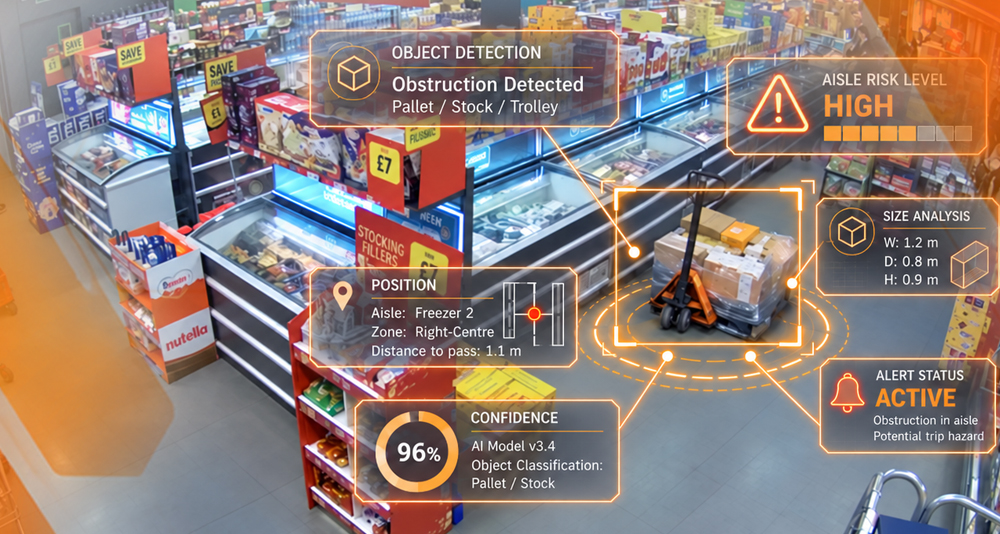
The physical store is being asked to do more.
It sells products, handles returns, supports self-checkout, manages promotions, holds inventory, serves customers and protects stock. In many retail businesses, the store is also becoming part of the fulfilment network.
That makes the store more than a place where transactions happen. It is a complex operating environment where customer experience, colleague productivity, availability and commercial performance meet.
The challenge for retail leaders is no longer simply how to add more capability to the store.
Retail has spent years getting better at measuring labour.
The next question is more useful: how effectively is that time being used?
Deloitte’s 2026 Global Retail Industry Outlook found that 71% of surveyed retail executives report a competitive advantage from stronger cost control. The report places productivity and operational excellence alongside financial discipline as core priorities for retailers in 2026.
That changes the productivity conversation.
The answer is not simply fewer people or more technology. It is making better use of the people and infrastructure already in place.
A colleague checking a shelf, responding to a queue or investigating an unusual checkout event is spending time on something that affects the store. The question is whether that time is being spent on what matters most at that moment.
Retail Economics’ 2026 Frontline Workforce Index, based on 2,000 UK retail and hospitality employees, offers another perspective, highlighting strain in workforce scheduling. The stability and predictability of employee schedules scored just 59 out of 100, the weakest score across the areas measured by the Index.
The report also highlights the commercial cost of getting workforce deployment wrong, with approximately $4.88 billion in unrealised annual earnings represented by workers who want more hours.
The message for store operations is clear. Retail has become better at measuring labour. The next challenge is making every hour of that labour more productive.
That requires more than knowing what happened. It requires knowing what matters now.
Retailers have more operational data than ever. Checkout systems record transactions, inventory systems record stock, workforce systems record hours and schedules, while CCTV records what happens across the physical store.
Each system provides useful information. The problem starts when that information becomes another task for the store team.
An alert tells someone that something happened. Someone then needs to assess it, decide whether it matters, work out what to do and find the right person to act.
Stores do not have unlimited colleagues standing by to respond to every alert.
A store with 100 alerts does not necessarily have a better view of its operation than a store with 20.
That is where the move from visibility to action becomes important.
An empty shelf matters. But knowing which empty shelf contains a fast-moving product during a peak demand period matters more.
A queue matters. But knowing when customer traffic and intervention demand are building helps a store decide where colleagues need to be.
The Vitamin Shoppe, a US health and wellness retailer, provides a useful example. Across its store network, the retailer used shopper-traffic data to identify the periods when customer demand peaked, then adjusted staffing around these “power hours”. Within seven months, the retailer reported a fleet-wide conversion increase of more than 100 basis points and more than $6 million in additional sales.
A missed customer interaction can mean a customer leaves without making a purchase. It is also a lost sales opportunity. An empty shelf is an availability issue. But it is also a sales opportunity issue.
A poorly executed promotion is a merchandising issue. It is also a missed opportunity to influence what a customer sees, considers and buys.
These distinctions matter less on the shop floor than they do in organisational charts.
The customer experiences the store as one environment.
The same is true of retail media. A retailer knows when an advert was displayed, but the more valuable question is what happened next. Did the customer stop? Did they engage with the product? Did they buy it?
Albertsons Media Collective provides a useful example. In a 2026 campaign for Mondelēz, the global snacking company, promoting Sargento Cheese Bakes, in-store screens across 116 stores generated 5.5 million impressions.
Its matched-market measurement found a 14% sales lift attributable to the in-store media, alongside a 1.5% increase in conversion.
The significance is not simply that the campaign generated sales. It is that the retailer was able to measure the link between an in-store experience and a commercial outcome.
This is where store intelligence adds another layer of context. Knowing that a customer stopped at a display, spent time engaging with a product and then moved towards the relevant shelf creates a richer picture of the path to purchase.
Thus, the strongest store improvements happen where customer behaviour, operational execution and commercial outcomes meet.
Most large retailers already have standards for how their stores should operate.
There are targets for availability, queue times, merchandising, service, safety, loss prevention and staffing. There are operating procedures and technology systems supporting each area.
The harder problem is consistency.
What separates a well-run store from an average one when both have the same strategy, products, processes and technology? The answer increasingly sits in the quality of execution.
A store can have the right staffing model, yet still have colleagues spending time on low-value checks. It may have sophisticated checkout technology, yet still rely on manual intervention where a screen prompt would have resolved the issue.
The difference is not necessarily another system. It is visibility into what is happening, the context to understand what matters and the ability to act at the right point.
Consider availability.
Knowing that a store has 20 product gaps gives the team information.
Knowing that three of those gaps are fast-moving, revenue-critical products gives the team a priority.
That distinction changes the question from “What is missing?” to “What needs attention first?”
That shift is where store intelligence becomes a productivity tool rather than simply a monitoring capability.
AI is increasingly becoming the means through which retailers turn this intelligence into action at scale.
The retail AI conversation is moving beyond experimentation and into day-to-day operations. KPMG’s 2026 research found that 74% of more than 250 consumer and retail leaders expect to be deploying AI at scale within the next 12 months.
The focus is moving towards measurable operational value, with fragmented technology stacks still presenting a barrier to scaling that value. For physical retail, that brings AI closer to the activities that determine how a store performs each day.
That means moving beyond AI as a tool for analysis and towards AI that contributes to the operation itself.
SAI One provides a live example.
In one UK grocery network, SAI One helped deliver a 50% reduction in stock loss within four weeks, with over 90% of alerts receiving a response from store staff.
The platform analysed existing camera feeds across checkout and store-floor activity, identifying events such as missed scans, concealment, walkouts and partial payment. When suspicious activity was confirmed, an alert was sent to store teams within seconds, with the visual evidence and location needed to respond.
The significance is not simply the reduction in stock loss. It is the operating model behind it. AI identifies an event, provides the context needed to understand it and supports a response while the situation is still unfolding.
AI does not have to sit outside the operation, producing information for someone to review later. It can become part of how the operation responds in the moment.
Traditional computer vision is good at recognising what appears in an individual frame: a person, a product, an object or a defined visual pattern.
Retail operations need more than that.
A store is a sequence of activity. What happens before an event, what happens after it and how different events relate to one another often determines what the retailer actually needs to know.
This is where SAI One's patented Vision Language Model makes a difference.
The VLM works across sequences of visual information, retaining context over time and interpreting the relationship between actions.
A shopper picking up a product is one event. That shopper carrying it through the store, arriving at checkout and completing a transaction without the item appearing in the transaction record creates a very different operational picture. The VLM connects those moments.
The same principle applies across store operations. A product interaction, a shelf condition, customer movement and a transaction do not have to remain isolated pieces of information. Their relationship provides the context needed to understand what is actually happening.
This is where connected store intelligence becomes useful.
SAI One turns existing cameras into continuous store intelligence, using our patented VLM to interpret visual activity in context.
A shopper moving through an aisle, a product interaction, a checkout event or an operational exception does not exist in isolation. Together, these signals provide a broader view of how the store is performing.
That wider view has implications across four areas of store performance:
 Operational Excellence & Workforce Productivity — helping teams use colleague time where it matters most, from real-time staffing and queue management to checkout, service and fulfilment throughput.
- Customer Experience & Commercial Growth — identifying customer friction, engagement and journey patterns that affect service, conversion and sales.
- Merchandising, Availability & Product Flow — improving on-shelf availability, replenishment, product placement and promotional execution, from shelf condition through to product flow.
- Risk, Compliance & Continuous Improvement — identifying safety, compliance and operational risks, connecting recurring issues across locations and helping retailers identify practices that improve execution.
These areas are closely connected on the shop floor. SAI One brings the visual signals together across these segments, giving teams the context to determine what needs attention rather than limiting visual intelligence to one function or event.
Thus, the value comes from connecting these signals across the wider store operation.
SAI One has been running live for four years across more than 1,000 stores and is one of only two vendors worldwide proven with a Vision Language Model at that scale.
That scale matters. Store intelligence has to work across real stores, real operating conditions and multiple use cases.
It also has to work with the infrastructure retailers already have.
The objective is not to create another layer of technology for every operational problem. It is to make the existing store more observable, more responsive and more consistent.
Retailers will continue investing in digital commerce, AI, automation and new customer experiences.
The physical store remains a critical part of that strategy.
The next advantage comes from making better use of what already exists inside it.
See the store better. Understand what is happening across the physical operation, not just within individual functions.
Run it better. Give teams clearer priorities and better information about where attention matters.
Grow its value. Improve availability, customer experience, colleague productivity and commercial performance through better execution.
The question for retail leaders is no longer simply how much technology the store has.