
Welcome to the first edition of the SAI Store Intelligence Newsletter.
Each month, we’ll explore the trends and ideas shaping the future of retail, sharing practical insights to help retailers better understand their stores.
Retail has never generated more data. Yet retailers have never had less visibility into the one sales channel that matters most — the store itself.
That is the gap this newsletter exists to close. Each month, we will examine what is actually happening inside stores, using insights from the SAI One platform across 1,000+ live stores, and explore what retailers can do about it.
This first edition is about self-checkout. The conversation has moved on from labour-saving and shrink. The retailers making real progress have stopped asking what happened at the checkout and started asking why — and what to do next.

What is SAI One?
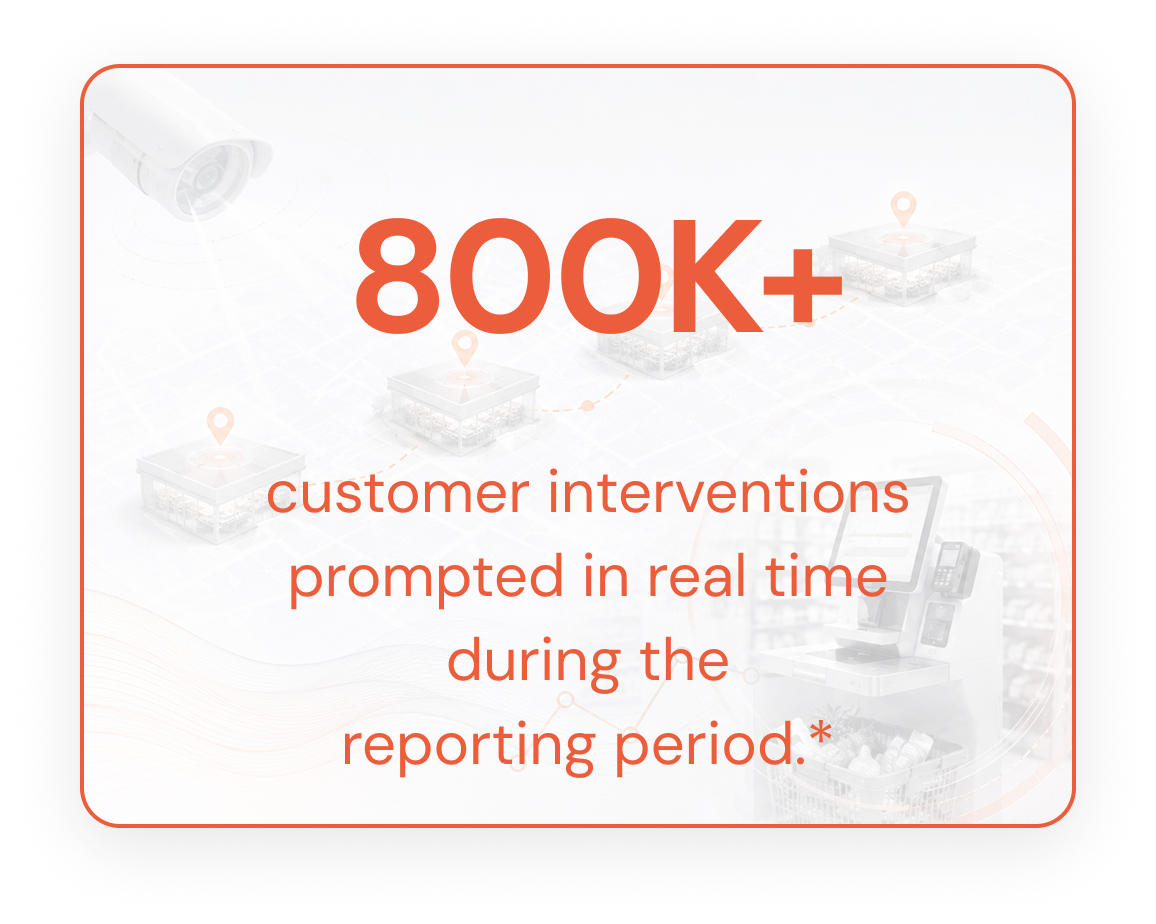
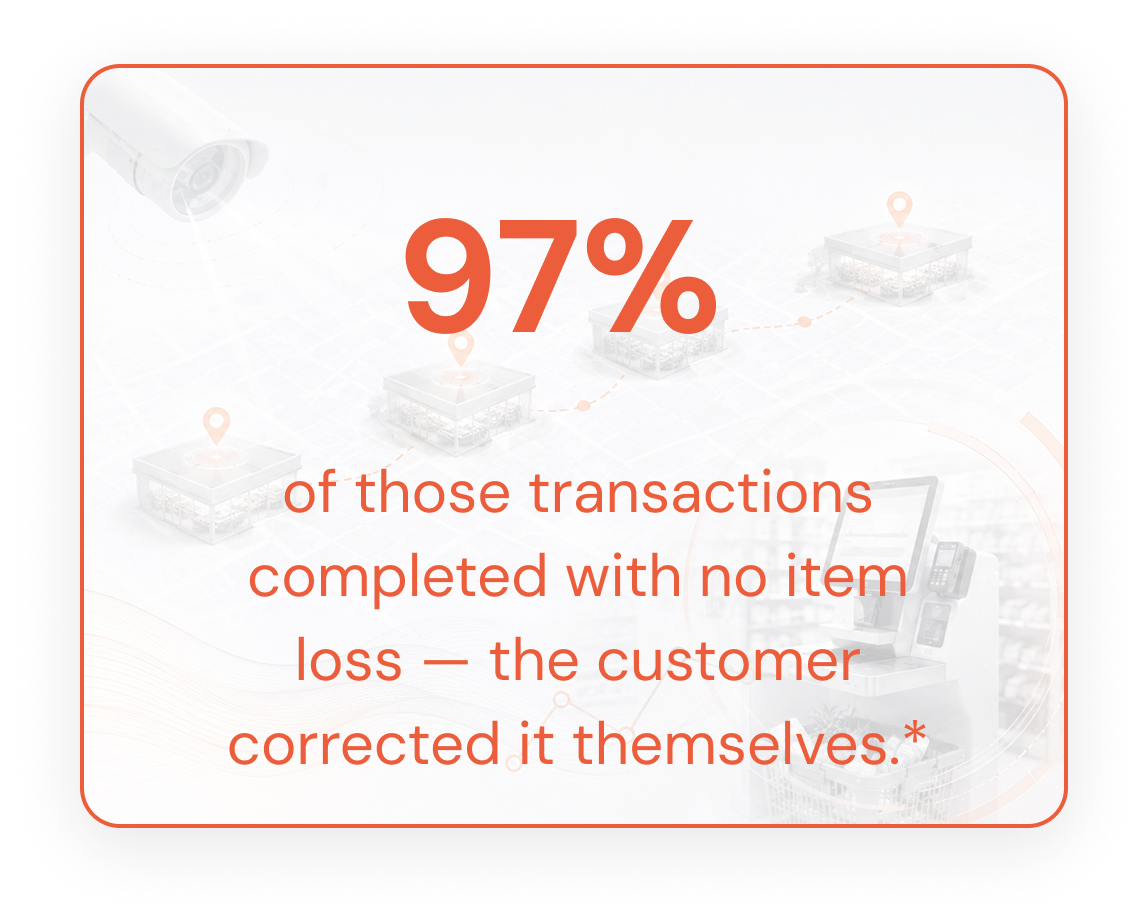
The operational insights in this edition are drawn from SAI One, SAI's store intelligence platform. Built on SAI's patented Vision Language Model, it turns the cameras retailers already have into continuous store intelligence — and moves beyond alerting to the next best action.
Self-checkout has quietly become one of the most important operational touchpoints inside the modern store.
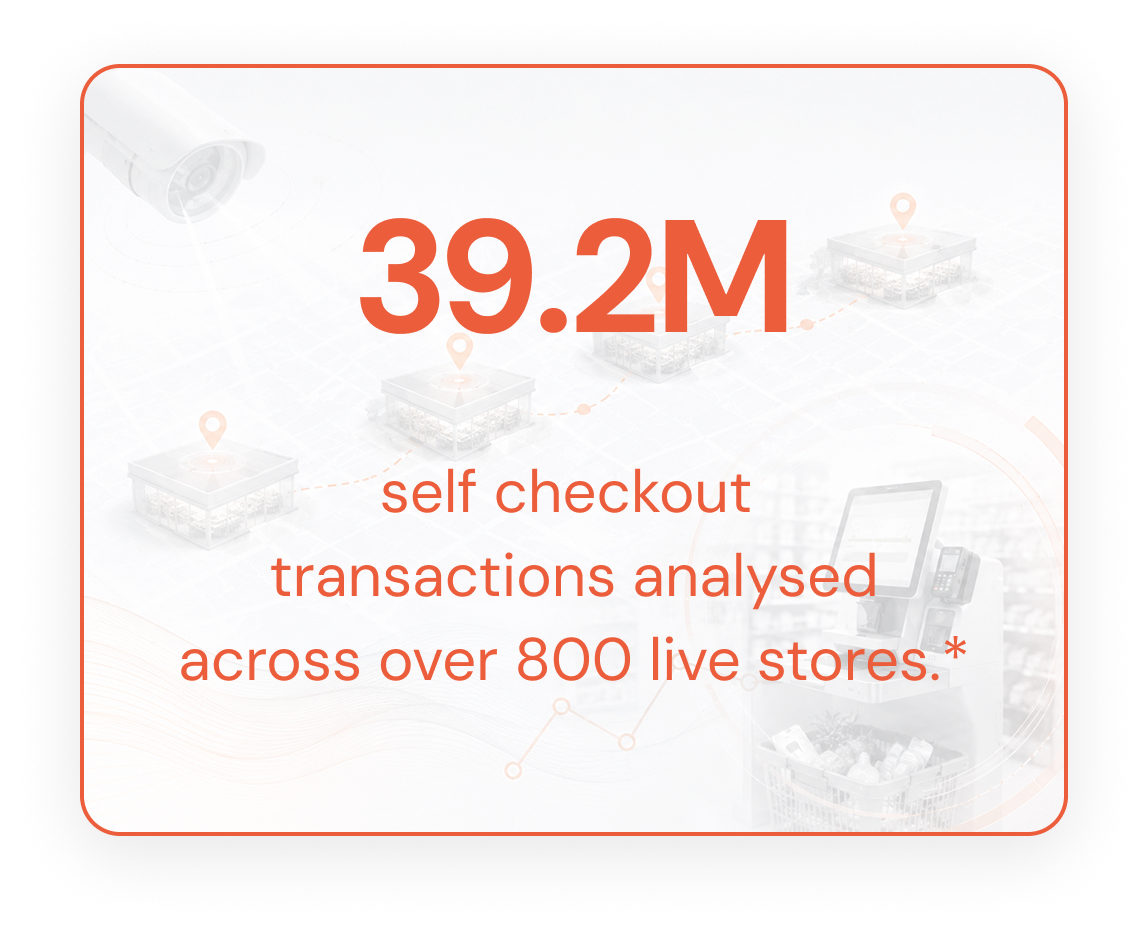
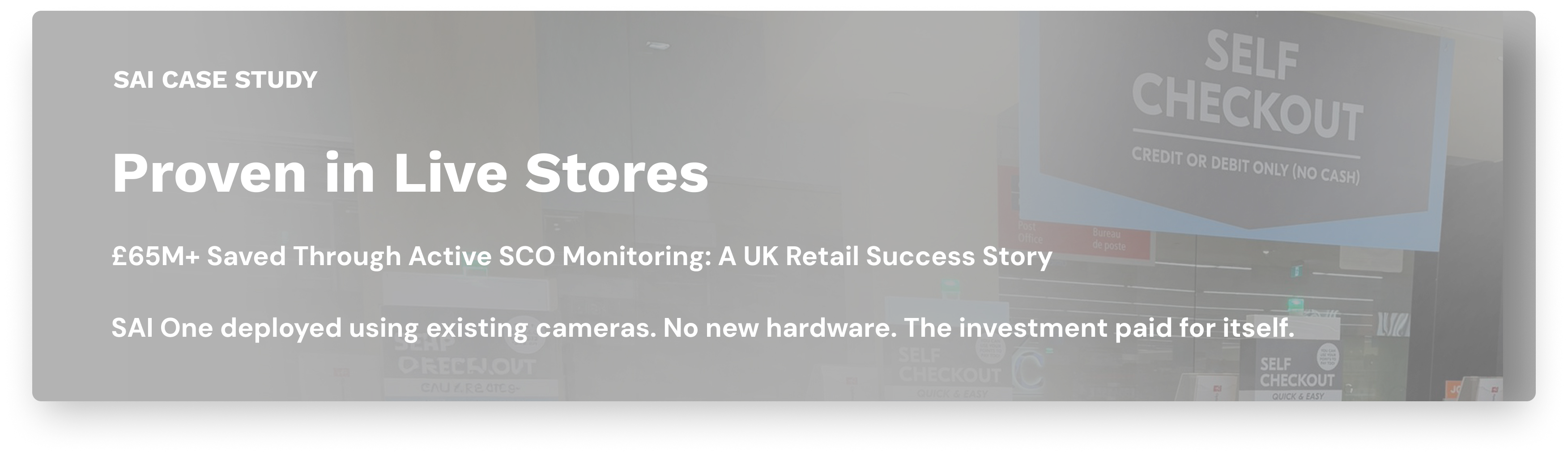
Operational reporting from SAI One, based on over 39.2 million self-checkout transactions across amalgamated data from many retailers using the SAI platform, provides a detailed view of how customers, colleagues and checkout technology interact every day.
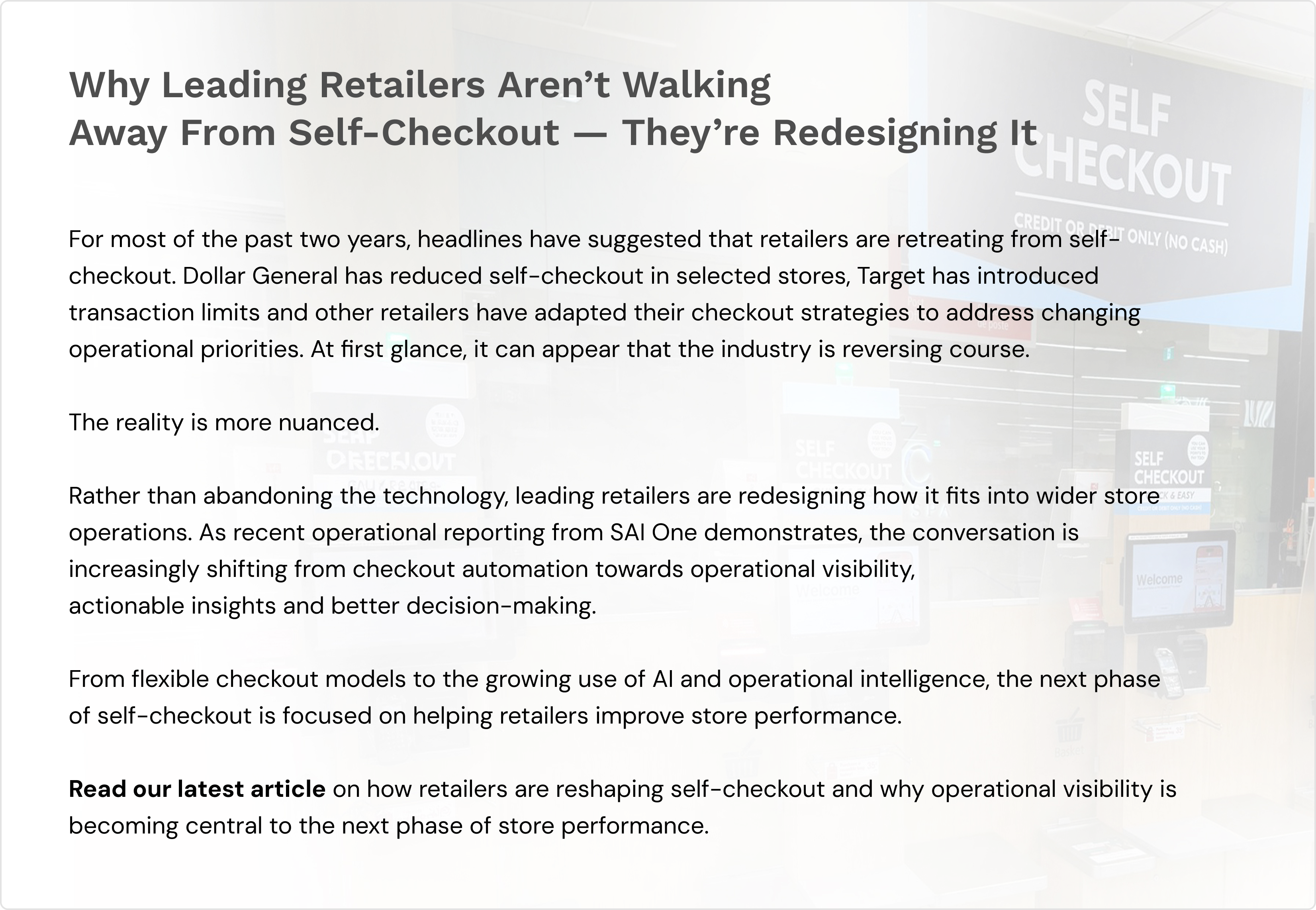
The wider industry is seeing the same shift. The ECR Self-Checkout Loss Report 2026 found that more than half of all customer transactions now pass through self-checkout where it is available. In some retailers,over 80% of transactions are carried out through self-checkout.
Viewed together, the evidence suggests something larger is happening. While conversations around self-checkout often begin with retail loss, many of the greatest opportunities lie in understanding how stores operate every day.
Three observations caught our attention.

One message emerged consistently from both SAI One's operational insights and wider industry research:
Self-checkout is no longer simply where transactions happen. It's where retailers gain a clearer understanding of how their stores operate—and where the next opportunities to improve often begin.
A recent fraud case in Ontario, Canada highlighted how self-checkout can be exploited by scanning lower-priced items in place of higher-value products. Police allege that a customer carried out the scheme at four Shoppers Drug Mart stores within an hour, causing nearly $1,000 in losses. Multiple fraud charges have since been filed.
Read MoreCzech retailer Albert, part of Ahold Delhaize, has begun rolling out AI product recognition across stores equipped with self-service checkouts following a successful pilot programme.
The system automatically recognises selected loose products, including fruit, vegetables and bakery items, reducing the need for customers to manually search for products during checkout. Albert says the rollout is designed to speed up transactions, reduce manual input errors and make self-checkout easier for customers.
Read More Through the Wise Owl's Eyes Retail leaders know their stores inside out. They don’t need to be told how self-checkout works. What's changing is what self-checkout can now tell us about how stores operate.
When self-checkout first appeared, the focus was straightforward. Replacing four staffed tills with four self-checkouts supervised by a single colleague allowed retailers to serve more customers with fewer colleagues.
Today, self-checkout tells a very different story.
Read MoreThe ideas explored throughout this edition raise important questions about the future of store operations. These additional resources provide further insights, practical examples and perspectives to help readers continue the discussion.