

Welcome to the third edition of the SAI Store Intelligence Newsletter.
Last month we showed how one platform connects the whole store. This month, we look at what store activity reveals about sales.
Your stores are busy, but could they achieve more with existing resources? Better visibility into stock, promotions, customer conversion and store operations can help retailers get better business returns every trading hour.
With SAI One now live across 1,000+ stores, managing 30K+ cameras and monitoring more than 4 million transactions a day, this edition examines how store-level insights can help retailers identify missed sales opportunities, improve customer conversion and assess loss-prevention effectiveness.
Thank you for joining us again. We hope this edition offers a fresh perspective on what your store data can reveal.

*Figures are drawn from SAI One operational reporting for 12 stores operated by one of SAI One’s leading UK retailers in September 2026. The stores were selected for complete and consistent data across availability, footfall and loss prevention. Client identity withheld.
The operational insights in this edition are drawn from SAI One, the patented Vision Language Model (VLM) platform from SAI. Proven across 1,000+ stores over four years, it turns existing cameras into continuous store intelligence, helping teams move from an alert to the next best action.
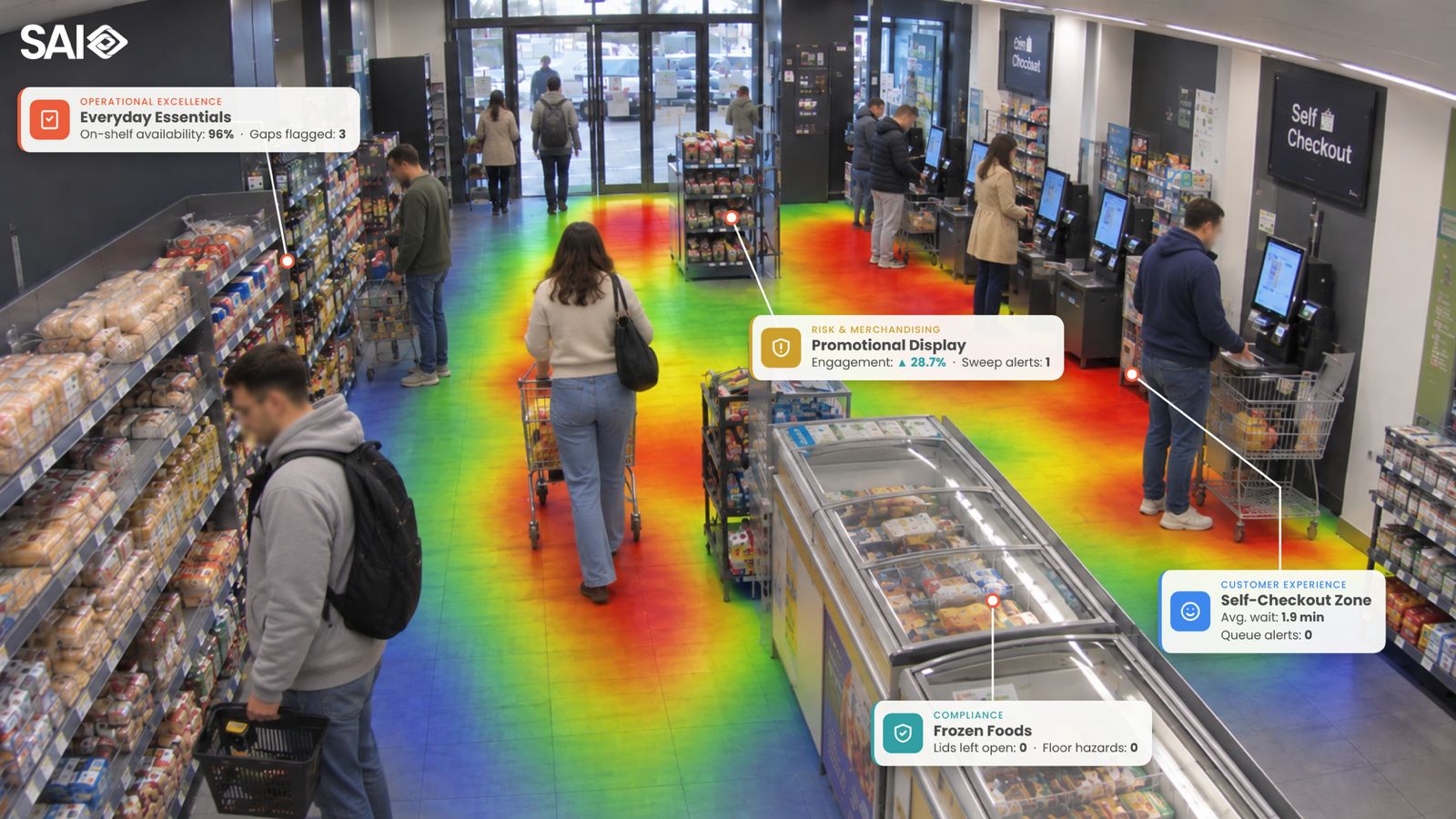
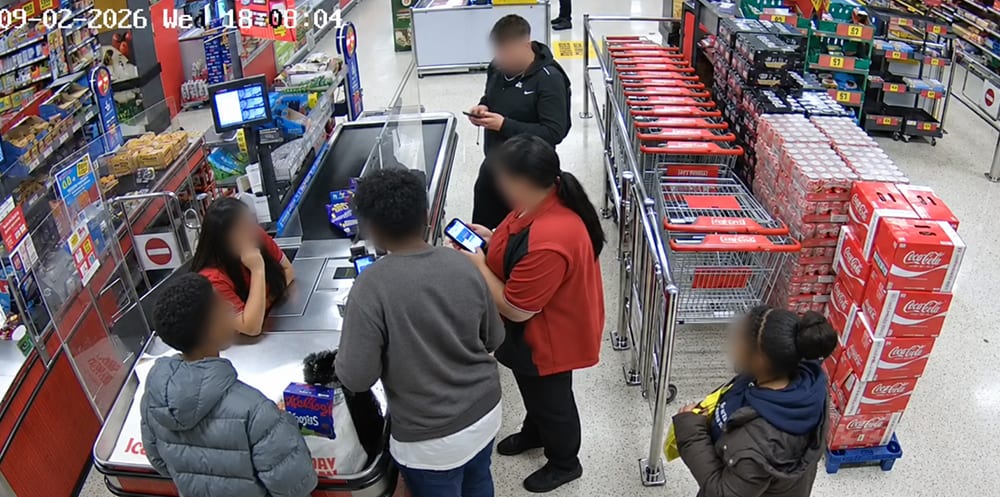
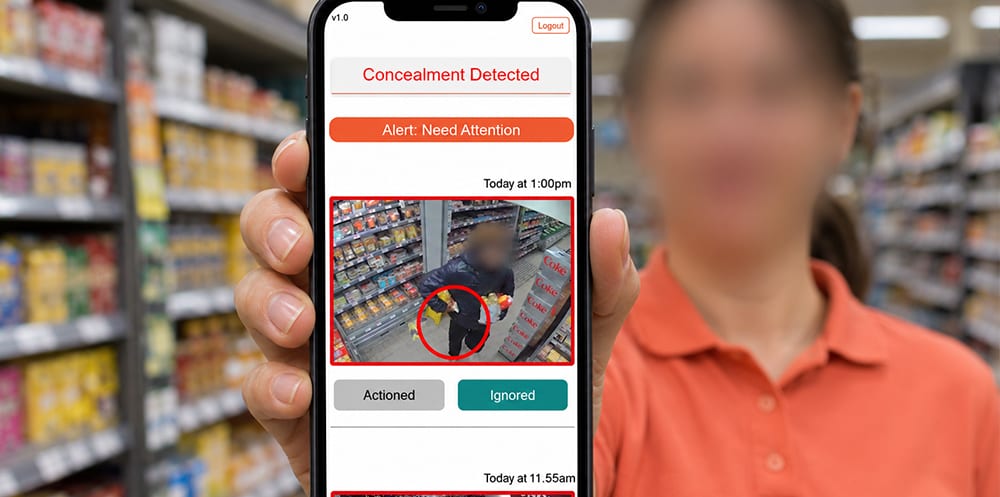
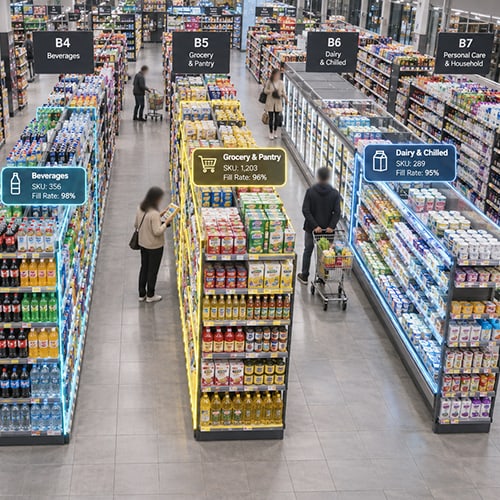
Store activity reveals where gaps exist. Repeated no-stock alerts identify replenishment issues, high footfall alongside lower conversion exposes missed sales opportunities, and potential concealment alerts highlight areas where incident response needs improvement.
Connected to transaction data, these signals show where performance is leaking.
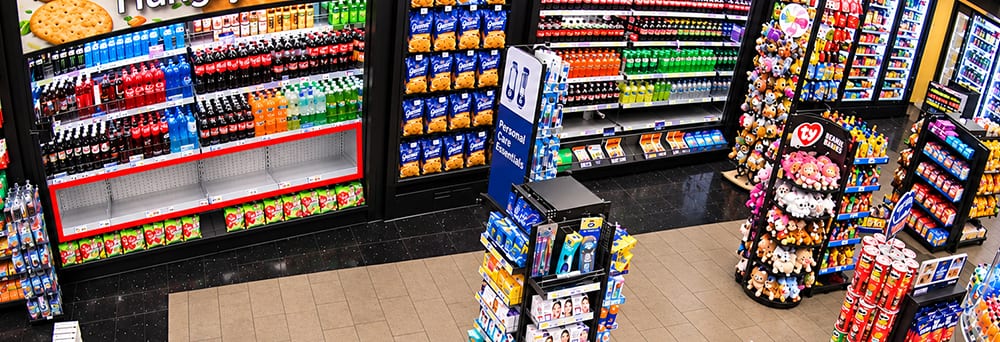
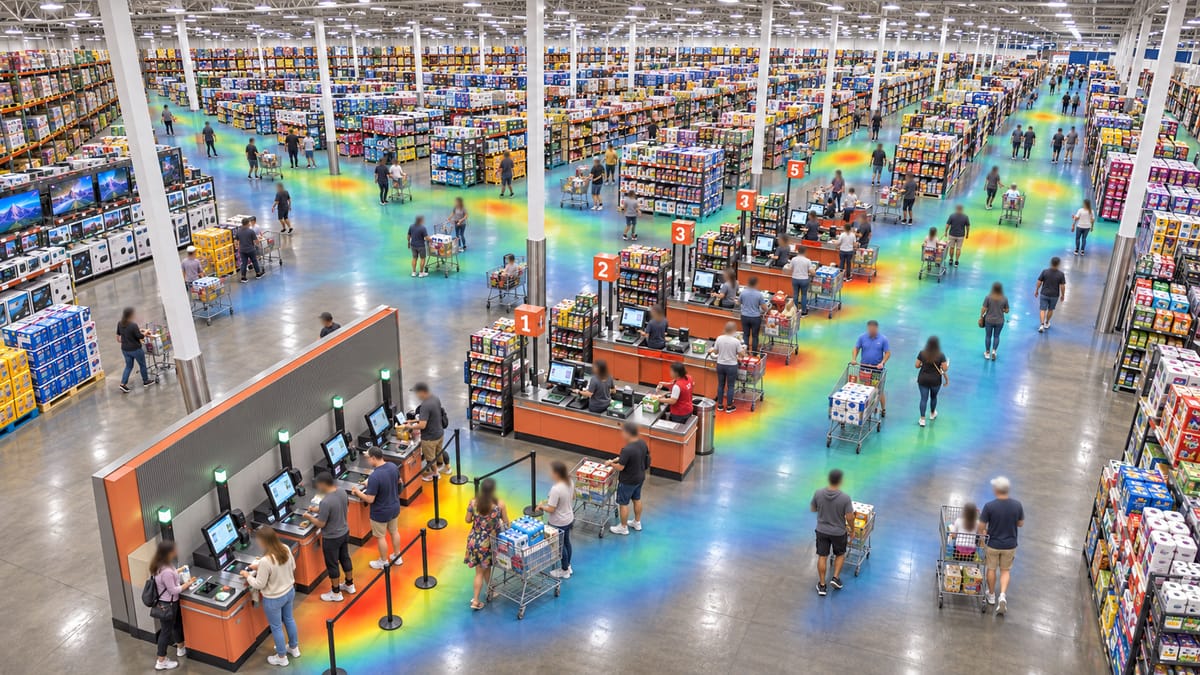
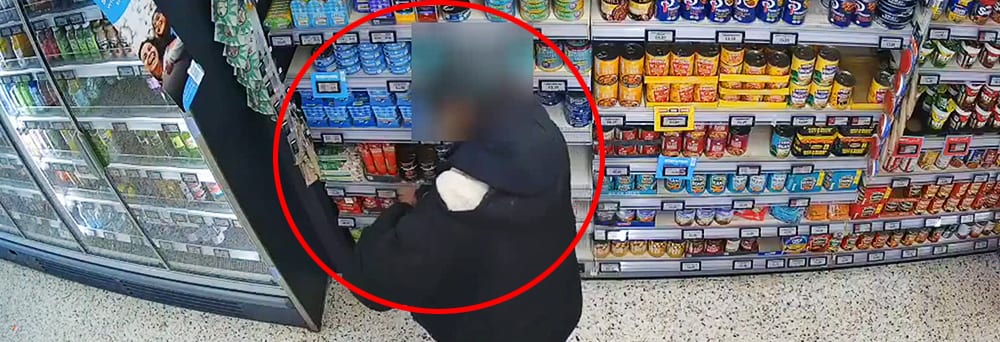
An alert is only useful when you know what it led to — and whether the action taken made a difference.

Across availability, customer conversion and retail loss prevention, connected store intelligence reveals where performance is affected and what needs attention.
The next question is what this intelligence can deliver at scale.
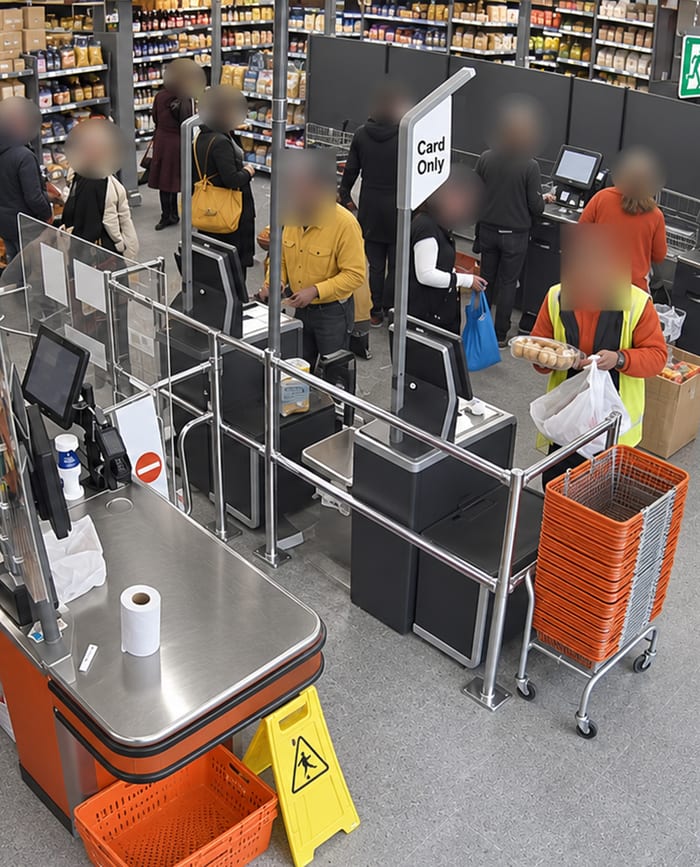
See how one of the UK's leading grocery retailers saved £65M+ through active self-checkout monitoring.
SAI One deployed using existing cameras. No new hardware. The investment paid for itself.

Than Your Store’s Capacity
Halloween, Black Friday and the run-up to Christmas bring changing demands to retail. Promotions influence shopping patterns, customer traffic shifts throughout the day, and store teams must balance service, replenishment, security and other operational priorities.
For retailers, the challenge is not simply preparing for busy days. It is understanding when and where pressure builds, how it affects retail store performance and whether teams have the information they need to respond.
In SAI One’s analysis of in-store activity for another leading UK retailer, Black Friday and Cyber Monday were the two busiest days of the 2025 BFCM period for theft, with Black Friday also ranking first for operational alerts. Yet the timing differed: operational alerts peaked between 9 am and 11 am on Black Friday, compared with 1 pm to 3 pm on Cyber Monday.
The geographical picture was just as revealing. Three regions accounted for 75% of operational alerts and 59% of theft incidents during the period. These differences matter because an estate-wide average can conceal where operational pressure is building and where additional support is needed.
The wider retail outlook suggests that peak trading stretches beyond Black Friday. The IPA’s 2026 Christmas research found that 22% of UK consumers plan to spend up to half of their Christmas shopping budget during Black Friday, while 27% expect to take advantage of the Boxing Day and January sales.
For retailers, this points to a prolonged period of promotional activity, making it important to understand how operational demands shift across different trading periods rather than plan around a single peak.
SAI One’s 2026 forecast for the same retailer points to substantial pressure beyond BFCM. Super Saturday, 19 December, is projected to be the busiest December day for both operational alerts, at about 530, and theft, at more than 90 incidents. That is about two-thirds higher than the figure recorded on the same date in 2025.
Boxing Day is another date to watch, with about 520 operational alerts and more than 85 theft incidents forecast.
Forecast note: Based on September 2026 daily averages for the same stores, adjusted using 2025 performance on the equivalent days.
Changing shopping preferences add another consideration. IGD’s Christmas 2026 outlook suggests that grocery sales value will rise while volumes remain broadly flat. Shoppers are expected to balance value-focused essentials with selective indulgences, including premium private-label party food, desserts and centrepieces. IGD reports that 51% of shoppers plan to buy more premium private-label products this year.
For store teams, these shifts make demand planning and execution particularly important. Understanding which products shoppers are likely to seek, when operational pressure is expected to peak and where replenishment or incident response need additional attention can help retailers prepare for the demands of the festive period.
Peak trading provides an opportunity to assess how well stores perform under pressure. Are teams identifying emerging issues quickly? Are resources directed towards the locations that need attention? And can retailers establish whether the actions taken actually improve outcomes?
Answering these questions requires more than counting alerts or reviewing sales totals. Retailers need to connect what happened with when and where it happened, what action followed and what changed as a result.
By bringing visual evidence and operational information together, SAI One helps retailers investigate patterns across their stores, identify recurring pressure points and assess where processes need to change.
With the Ask SAI feature on the SAI One dashboard, teams can take this a step further by asking questions such as, “Which stores are showing the highest operational alert levels ahead of 19th December?” and receive insights to help identify where attention may be needed.
The aim is not simply to get through the busiest days. It is to understand what affects store performance, respond more effectively and use those findings to improve operations throughout the year.
to Store Performance
At one US retailer, shopper traffic peaked between 3 pm and 4 pm, but freshness markdowns were typically applied in the morning and later in the evening. The timing revealed an opportunity to align store routines with customer demand.
Our latest Industry Spotlight examines how connected store intelligence helps retailers identify operational gaps, improve decision-making and identify opportunities for retail sales optimisation.
From freshness checks and waste management to pricing discrepancies and self-checkout losses, see how SAI One connects store activity with operational action and measurable business outcomes.
The article also shows how retailers can identify patterns across the stores and assess the potential return on investment from operational improvements.
Read the full article to know how better use of retail store intelligence can support stronger performance across the estate.
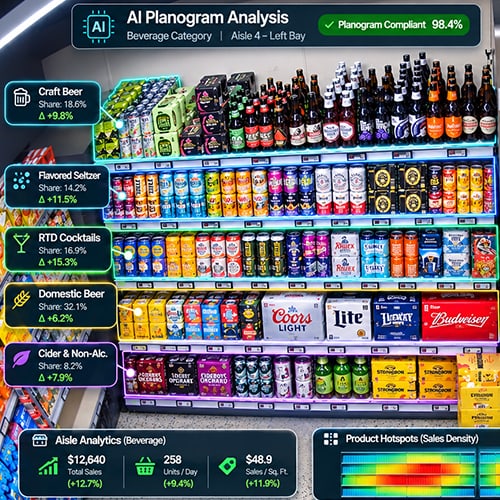
In this third edition, we’ve explored how everyday store activity can reveal gaps in availability, customer conversion and retail loss prevention. But how can retailers identify the risks that are going unnoticed?
Use our checklist to identify blind spots across your store.
Meet the SAI team to discuss how SAI One helps retailers improve store performance through Vision AI-powered intelligence.
Stand: 6669