

Welcome to the second edition of the SAI Store Intelligence Newsletter.
Last month, we focused on self-checkout and the operational insights it reveals. This edition takes that same store intelligence perspective across the whole store.
Retailers have more store data than ever, from cameras and POS to inventory, workforce and customer-flow systems. The challenge is bringing those signals together to understand what matters, where attention is needed and what to do next.
With SAI One now live across 1,000+ stores, managing over 30K+ cameras and monitoring more than 4 million transactions a day, this edition looks at what live-store evidence reveals about better execution, from operational risks and colleague intervention to availability and store performance.
An alert tells you what happened. Store intelligence tells you what it means and what to do next.
Thank you for joining us again. We hope these insights offer a useful perspective on what your store is telling you.

*Figures are drawn from SAI One operational reporting across three separate retailer datasets. Client identities have been withheld. The first two figures cover 60 days of reporting; the inventory dataset covers over 45 days. Estate definitions vary by dataset.
The operational insights in this edition are drawn from SAI One, the patented VLM (Vision Language Model) platform from SAI. It turns existing cameras into continuous store intelligence, bringing visual context and operational data together to move from an alert to the next best action.
The gap between seeing what is happening in a store and knowing what deserves attention is widening.
Independent research commissioned by SAI in April 2026, involving more than 1,000 UK shoppers, found that 60% believe stores are often unaware of what is happening on the shop floor in real time. At the same time, 75% expect stores to adapt in real time to changes such as queues, stock levels and congestion.
That puts the focus on what retailers do with better visibility. Seeing more is useful. Knowing what matters, deciding what to do next and measuring the outcome is where store intelligence creates value.
Three observations from live-store data show what this looks like in practice, from prioritising operational risks to reducing unnecessary colleague intervention and getting the right products back on the shelf faster.
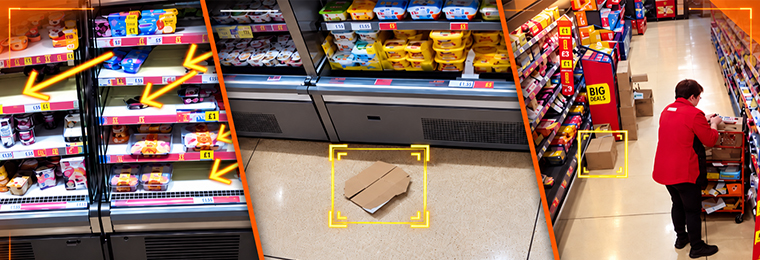
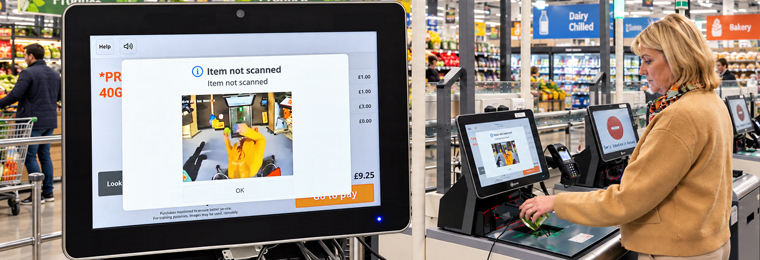
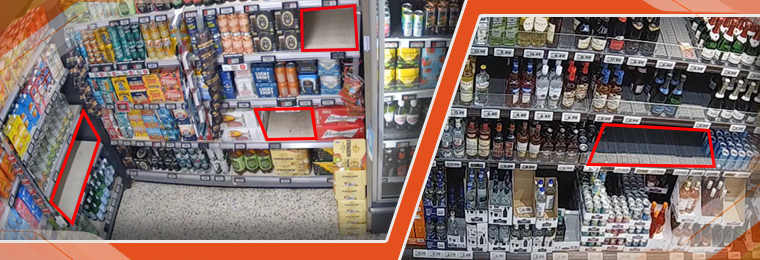
From safety risks to empty shelves, the priority is not finding more issues. It is finding the right ones first.

Across these examples, the pattern is consistent. Better visibility creates value when it helps teams manage operational risk, improve the customer experience, protect product availability and continuously raise execution standards.
The next question is scale.
What happens when the same approach is applied across thousands of checkouts, millions of transactions and a live retail estate?
See what this looks like in practice in the case study below.
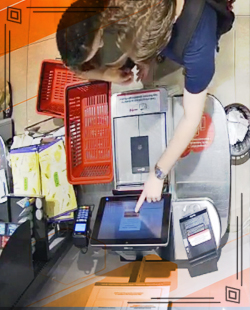
A UK grocery retailer used SAI One to detect loss events across checkouts and store aisles, giving teams real-time visibility to respond.
Is Better Store Execution
More data. More alerts. More technology. But are your stores actually performing better?
The physical store is being asked to do more, yet the challenge is no longer simply adding more capability. It is making better use of the people, technology and infrastructure already in place.
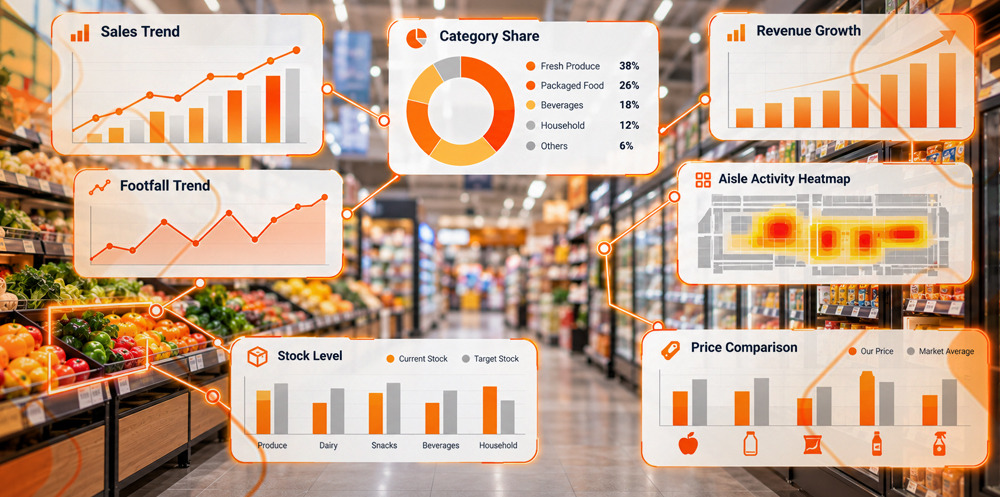
Our latest Industry Spotlight explores why more store data does not automatically mean better execution, and why the real value comes from knowing what matters, where attention is needed and what to do next.
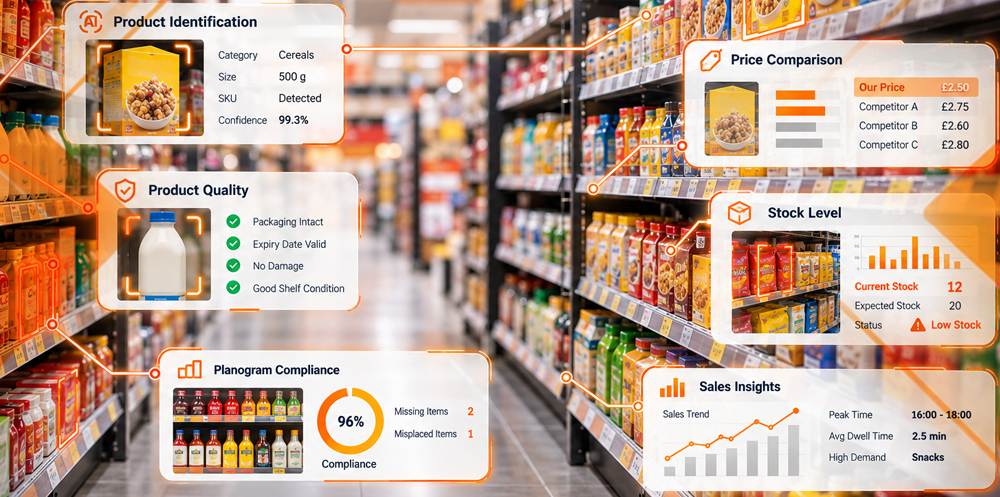
From workforce productivity and customer experience to availability, merchandising and loss prevention, the article looks at how connected store intelligence and Vision AI help turn visibility into better decisions and stronger store performance.
Read the full article to explore where the next retail advantage could come from.

Investigations Is Time Given Back
An incident rarely ends when an alert is raised. Teams still need to establish what happened, find the relevant footage, connect related events and decide what needs further attention.
That investigative workload grows quickly across a large estate. In an SAI One analysis** for a UK grocery retailer, more than 70 incidents involved individuals returning to stores after previous confirmed theft incidents, across 25 stores. More than 50 repeat offenders were identified.
All of these return incidents were confirmed matches to previously validated incidents, with the most frequent individual returning five times.
These matches are part of SAI One's separately enabled Revisit capability, where only confirmed incidents reviewed by trained human analysts are included, with privacy management supported by SAI's ISO 27701 certification and GDPR controls.
The value of that visibility is not simply finding another incident. It is connecting events over time, bringing together the relevant images, products and incidents rather than requiring teams to search through hours of footage manually.
For the same retailer, SAI One reduced average investigation time from 45 minutes to 18 minutes across these revisit incidents, giving teams more capacity to focus on cases requiring deeper investigation.
For retailers, the lesson is broader than faster investigation. Connecting repeat incidents, building evidence faster and understanding patterns gives teams a clearer picture of the problem and more capacity to act.
**Figures are drawn from SAI One operational reporting for one UK grocery retailer. Client identity has been withheld. The data covers 116 days of reporting across 25 stores.

SAI is heading to the Loss Prevention Leadership Summit to explore how AI and connected intelligence are helping retailers strengthen loss prevention, asset protection and store security.
Planning to attend? Let us know if you'll be there and would like to meet the SAI team.