Why Leading Retailers Aren't Walking Away from Self-Checkout—They're Redesigning It
For most of the past two years, one narrative has dominated conversations around self-checkout retail.
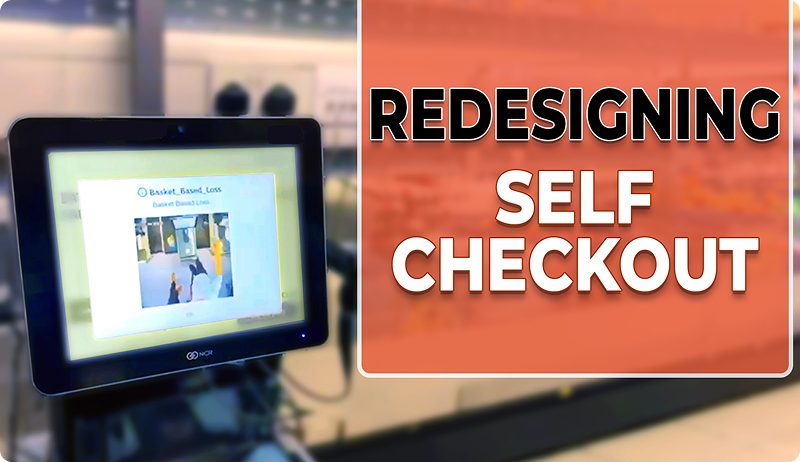
The headlines certainly make it seem that way.
Dollar General announced plans to reduce self-checkout in selected stores. Target introduced limits on its Express Self-Checkout lanes.
Across the industry, stories linking self-checkout to rising shrink, customer frustration and operational challenges have fuelled speculation that retailers are beginning to reverse one of the biggest technology investments of the past decade.
It's an understandable conclusion. But it's also an incomplete one.
The reality is that leading retailers aren't abandoning self-checkout systems. Instead, they're redesigning how those systems fit into modern store operations.
That distinction matters because it reflects a much broader shift in retail strategy.
The first generation of retail self-checkout technology focused on labour savings and convenience. Today, retailers expect these systems to deliver far more.
Modern self-checkout is expected to:
 Improve customer experience
- Support colleague productivity
- Reduce operational friction
- Eliminate shrink
- Generate insights that improve overall store performance
In other words, self-checkout is no longer viewed simply as a payment technology.
It's becoming part of a retailer's operational strategy — and that shift is quietly reshaping the future of self-checkout.
Over the past decade, self-checkout retail has become a core part of modern store operations. Research from the University of Leicester and the ECR Retail Loss Group found that self-checkout now processes more than half of all transactions across participating grocery retailers, highlighting how deeply embedded the technology has become.
As adoption has increased, however, retailers have discovered that checkout is about much more than processing payments.
It's also where many day-to-day operational challenges become visible.
A typical store may deal with:
- Barcode scanning issues
- Age-restricted purchases
- Payment failures
- Customer assistance requests
- Product exceptions
- Unexpected colleague interventions
Individually, these incidents appear routine.
Collectively, they influence labour productivity, customer satisfaction and overall store performance.
Operational reporting from SAI One also shows that self-checkout performance remains remarkably consistent at scale. During the latest reporting period, customer interventions accounted for just 2% of all self-checkout transactions, providing retailers with a dependable operational baseline from which meaningful changes can be identified.
That's why retailers are asking different questions today.
The conversation has shifted from "Should we invest in self-checkout?" to "How can self-checkout create greater operational value?"
One of the most interesting developments is that retailers are not arriving at a single answer.
Rather than following a single blueprint, they are adapting checkout strategies to suit their customers, store formats and operational priorities.
For years, checkout areas followed a familiar layout, with staffed tills on one side and self-checkout terminals on the other.
Today, many retailers are moving towards more flexible front-end operations. Rather than treating staffed and self-service checkouts as fixed environments, they're increasingly investing in modular checkout solutions.
In practice, checkout areas can adapt throughout the day, shifting between more staffed lanes and greater self-service capacity as customer demand changes. Colleagues can then focus where they're needed most, whether serving customers directly or supporting multiple self-checkouts.
Retailers such as Germany's hagebau are adopting flexible checkout infrastructures that combine traditional and self-service checkout experiences, helping support changing consumer expectations while maintaining consistency across different store formats. Similar approaches are becoming more common as retailers seek to improve customer experience, optimise labour allocation and make better use of existing store space.
Instead of asking customers to adapt to checkout, retailers are redesigning checkout to adapt to customer demand.
The question is no longer, "Should we introduce self-checkout?" It's becoming, "What's the right checkout model for this store, at this time, for these customers?"
The answer will differ from one retailer to another, shaped by factors such as store format, customer demographics, basket size, trading patterns and the level of colleague support required throughout the day.
There is no universal blueprint. The retailers making the greatest progress are designing checkout environments that can evolve alongside the changing needs of both their customers and their stores.
Recent retailer decisions clearly demonstrate this shift.
When Dollar General announced it was reducing self-checkout in thousands of stores, many interpreted the move as evidence that self-checkout had failed. The reality was more nuanced.
Rather than abandoning the technology, Dollar General adjusted how self-checkout was used across different store environments.
The retailer removed or limited self-checkout in around 12,000 stores, while continuing to offer it in a limited number of higher-volume, lower-shrink locations.
The retailer's approach reflected a broader operational strategy:
- Introduce associate-assisted checkout in stores experiencing higher shrink or operational challenges.
- Retain self-checkout in locations where it continued to improve efficiency and customer flow.
- Adapt the checkout model according to each store's trading environment rather than applying a single approach across the estate.
Sainsbury's has taken a different approach, upgrading its checkout technology through the rollout of new point-of-sale systems and next-generation self-checkout technology across its supermarkets, convenience stores and petrol stations.
According to the retailer's announcement, the new platform enables colleagues to approve customer transactions remotely while providing real-time data and analytics to help speed up the customer journey.
Two retailers. Two different strategies.
Yet both point to the same conclusion. Success is no longer determined by the number of self-checkout terminals a retailer installs. It's determined by how effectively checkout is designed to support the wider operation of the store.
This evolution is changing how retailers evaluate self-checkout retail.
When self-checkout was first introduced, success was measured using relatively straightforward metrics such as transaction speed, customer adoption and labour savings.
Those measures remain important, but they no longer tell the full story.
For example, SAI One's latest operational reporting recorded a 3% increase in self-checkout transaction volumes compared with the previous reporting period, while maintaining consistent operational performance.
That combination of growth and stability provides a clearer picture of how checkout contributes to wider store performance.
Retailers increasingly recognise that checkout performance cannot be separated from overall store performance.
A transaction may complete successfully, yet the customer may still leave frustrated. Queues may be shorter, yet colleagues may spend significant time responding to recurring interventions.
Thus, checkout has evolved from being a payment process into one of the most valuable operational touchpoints in the store. It now influences customer experience, labour efficiency, shrink control and overall productivity.
That broader perspective is laying the foundation for the next phase of AI self-checkout.
Modern stores generate enormous volumes of operational information. This includes point-of-sale data, inventory, video footage, workforce schedules and exception reports.
So, the challenge isn't collecting more data.
Rather, it's understanding how that information connects.
Consider two stores reporting similar levels of colleague interventions at self-checkout. On paper, their performance appears almost identical.
Yet one store may be dealing primarily with age-verification requests during predictable trading periods, while another experiences repeated barcode recognition failures linked to a specific product category.
Without context, both stores simply appear to have high intervention rates. Research reinforces why operational context matters. Research led by the University of Leicester in the Self-Checkout Loss Report 2026 found that missed scans are the most frequent loss type at self-checkouts, occurring in approximately 1% to 4.8% of transactions.
Understanding why these incidents occur is therefore becoming just as important as detecting them.
With context, retailers can identify the underlying causes and make more informed operational decisions. That's the direction in which the industry is steering.
The next generation of AI self-checkout is designed to do more than generate alerts. It helps retailers understand the causes of operational issues so they can prioritise the improvements that will have the greatest impact.
The role of AI in self-checkout is changing.
Early AI systems were primarily designed to detect predefined events, such as barcode scanning errors, unattended items or requests for colleague assistance. These capabilities remain valuable because they help retailers identify operational issues as they occur.
However, retailers are increasingly looking beyond event detection.They want technology that explains the reasons behind operational events rather than simply recording them.
This is where Vision Language Models change what is possible — and SAI holds the patent. Unlike traditional computer vision, which classifies what it sees frame by frame, a VLM reads the store the way a person would: it holds context across time, understands sequence and intent, and connects what it sees to the operational data around it.
SAI has been running its VLM-based SAI One platform in live stores for four years, across more than 1,000 of them — one of only two vendors worldwide proven at that scale.
Operating at that scale allows SAI One to reveal how seemingly unrelated incidents form wider operational patterns, giving retailers the context they need to act with greater confidence.
Understanding what's happening inside a store is only valuable if it leads to better decisions.
That's why retailers are increasingly looking for solutions that connect information across self-checkout, point-of-sale systems, video and store operations, presenting insights in a way that supports day-to-day decision-making.
This is the thinking behind SAI One.
Rather than treating checkout activity as a series of isolated events, SAI One brings together operational data from multiple sources to help retailers identify recurring patterns, investigate operational issues and respond more effectively.
SAI One's operational analysis illustrates this more clearly. Over a 60-day period, it identified nearly 3,090 item switching occurrences, involving 4,400 switched items across over 800 live stores. While any single event can appear insignificant, analysing these behaviours collectively reveals recurring operational patterns that would otherwise remain hidden.
Notably, item switching activity was identified across almost 90% of the SAI One estate, demonstrating that these behaviours are not confined to a small number of locations but represent a broader operational challenge that benefits from continuous visibility.
Importantly, this approach reflects the direction in which the wider industry is moving. Retailers are no longer evaluating technology solely on its ability to automate individual tasks. They're increasingly assessing how well it helps colleagues understand store performance, improve decision-making and continuously optimise operations.
The debate around self-checkout retail has moved well beyond the question of whether retailers should invest in the technology.
For most major retailers, that decision has already been made.
The more important question is how self-checkout contributes to the overall performance of the store.
Different retailers are taking different approaches because they're solving different operational challenges, yet they all share the same objective: creating stores that operate more efficiently while delivering a better customer experience.
That is why the future of retail self-checkout technology is about helping retailers understand their operations more clearly, identify opportunities for improvement more quickly and make better decisions every day.
Retailers that succeed over the coming years will not be those with the most self-checkout terminals or the newest ones. They will be the ones that can see what is happening across their estate, understand why, and act on it before it costs them. The technology is not the advantage. The visibility is.
Self-checkout has entered a new phase of maturity.
Leading retailers are redesigning how self-checkout fits within their wider operating model, recognising that checkout is no longer just a place where transactions are completed. It's a valuable source of operational insight.
As AI capabilities continue to evolve, the greatest opportunity will come from helping retailers interpret data and turn it into practical improvements across their stores. Ultimately, the future of self-checkout retail will be shaped not by the technology itself, but by how effectively retailers use the insight it provides.